Author: mike

  • a train trip across europe with a eurail pass

    a train trip across europe with a eurail pass

    I have always wanted to take a train trip across Europe. There is something romantic and timeless about the idea of hopping onto a train in one country, watching the countryside roll past the window, and stepping off a few hours later right in the heart of a completely different city. In the late summer of 2019, I finally stopped daydreaming and pulled the trigger on a Eurail pass to travel through several countries.

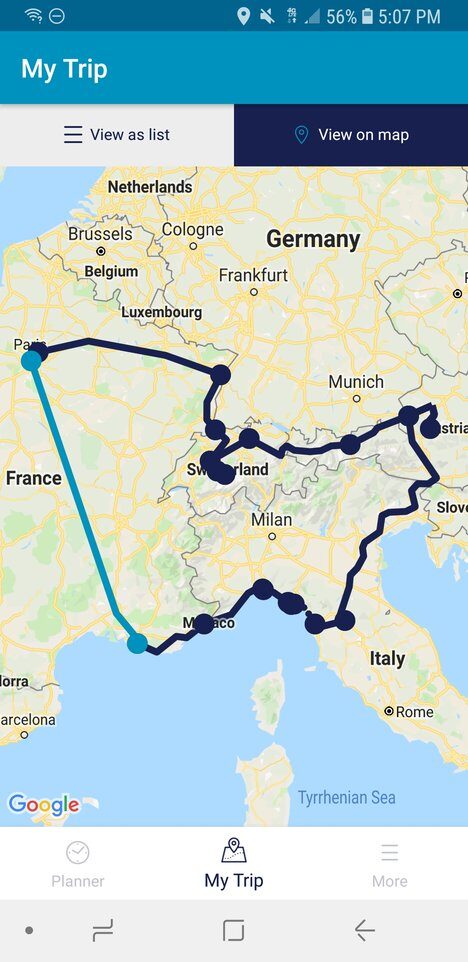
    With a backpack and rail pass in hand, I spent ten days looping through France, Switzerland, Austria, and Italy. Traveling by train meant no airport security lines, plenty of room to stretch out, and continuous front-row seats to alpine valleys, river canyons, and coastal bluffs. Here are 15 of my favorite spots and photos from the journey across the rails.

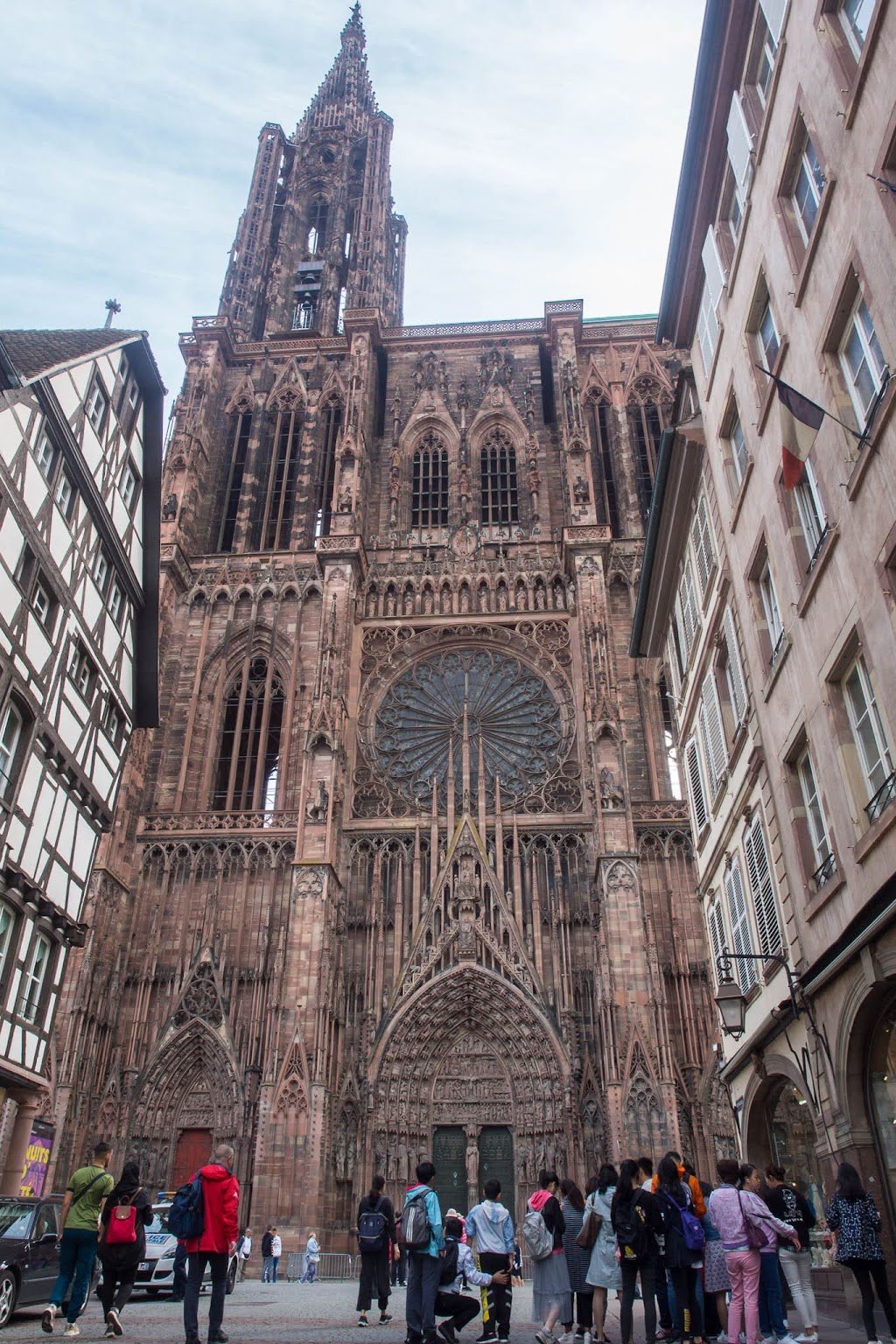
    1. Cathédrale Notre-Dame de Strasbourg — Strasbourg, France
    Strasbourg Cathedral sandstone gothic facade and single spire
    The towering sandstone facade and single spire of Cathédrale Notre-Dame de Strasbourg.

    My train journey kicked off in Strasbourg in the Alsace region, right along the French-German border. The Cathédrale Notre-Dame de Strasbourg is staggering when you see it in person. Built out of distinctive reddish-pink Vosges sandstone, it was actually the world’s tallest building for over two centuries. Standing at its base in the narrow plaza, the sheer scale and gothic detail make you feel completely dwarfed.

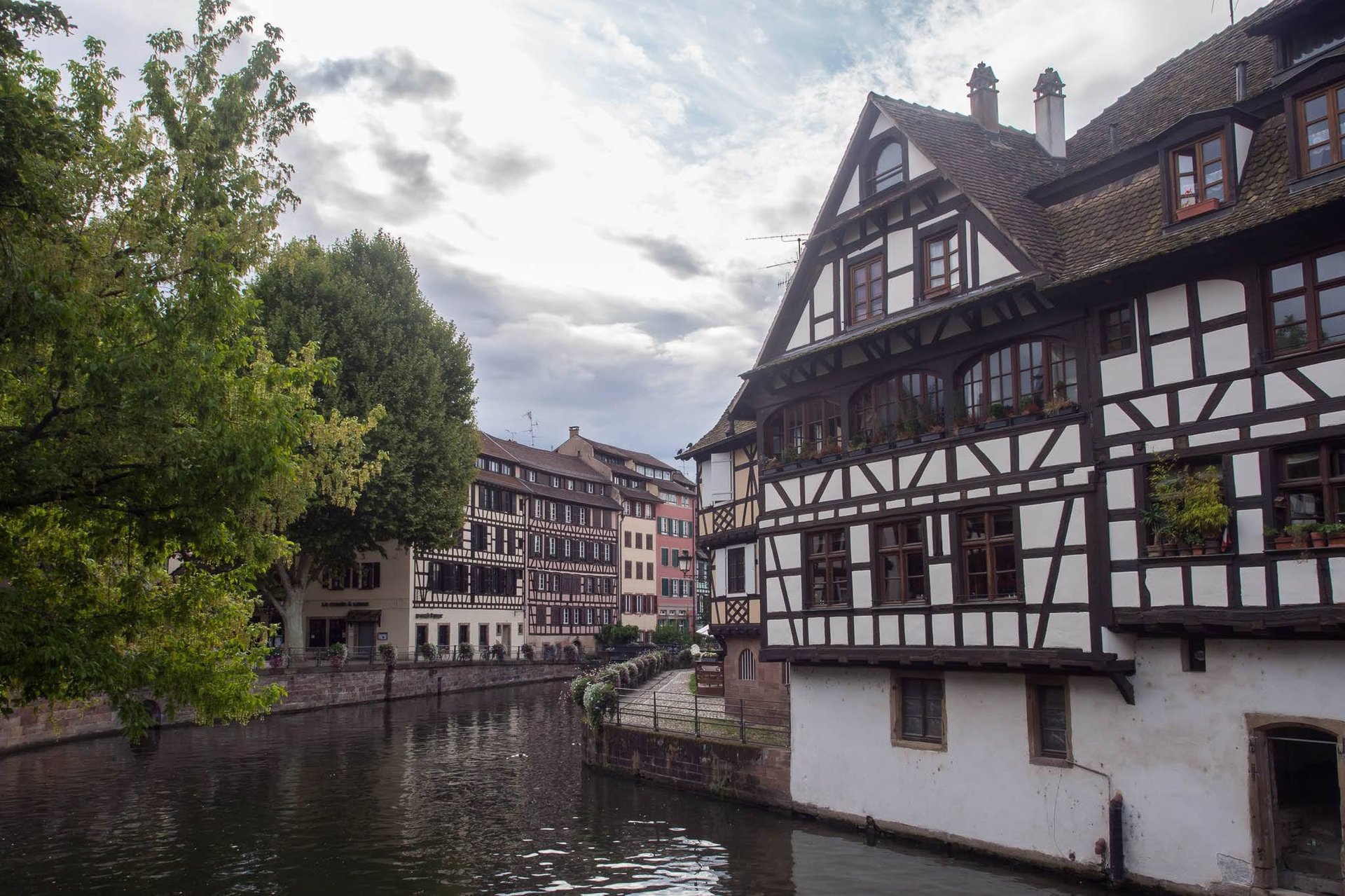
    2. La Petite France — Strasbourg, France
    Canal and half timbered houses in Strasbourg Petite France
    Half-timbered houses and canals in La Petite France, Strasbourg.

    A short stroll from the cathedral brings you to La Petite France, Strasbourg’s historic waterfront district. Half-timbered tanners’ homes dating back to the 16th and 17th centuries line the peaceful canals of the River Ill, with weeping willows hanging over the waterways. It felt almost frozen in time and was the perfect setting to ease into the trip before catching my next train.

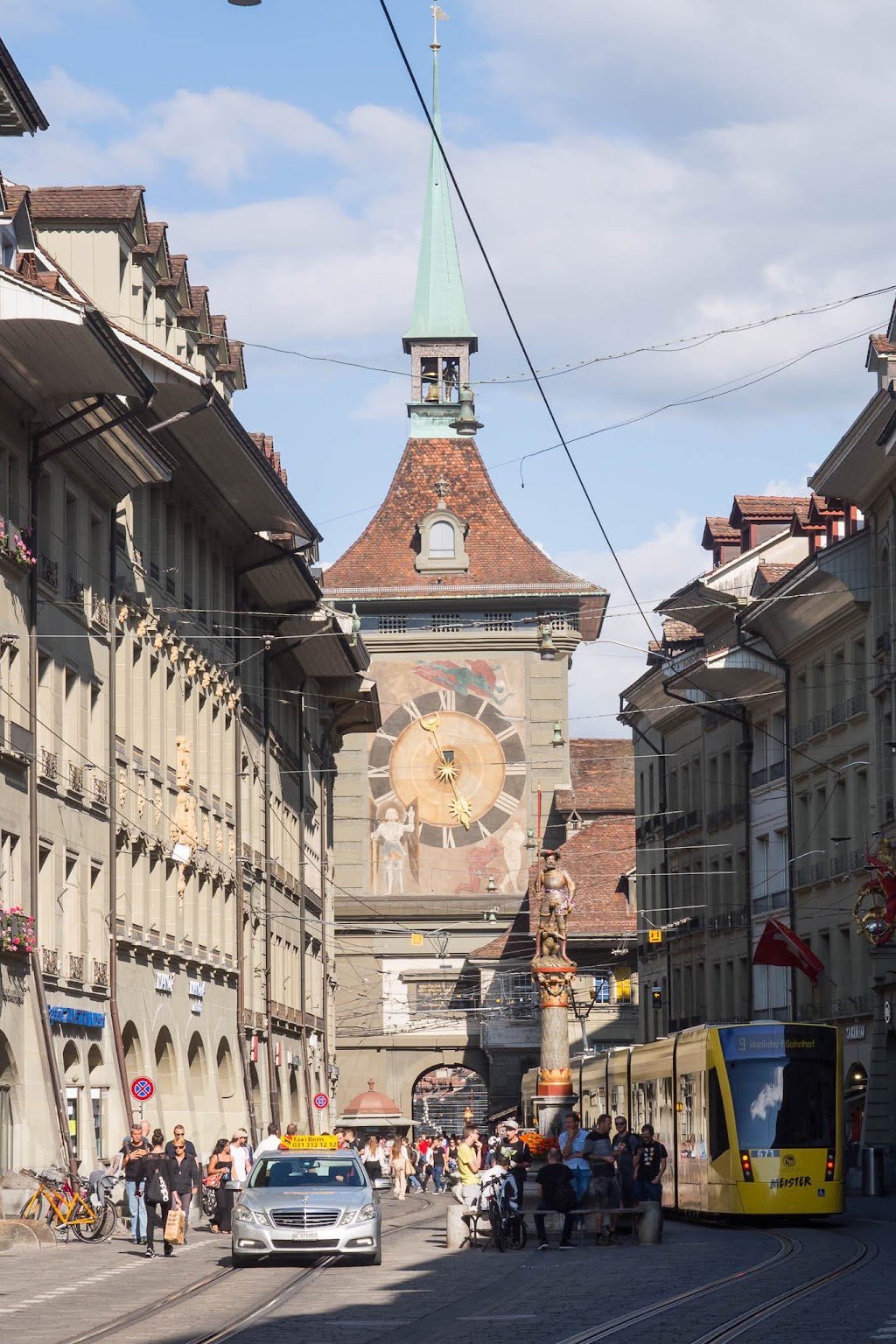
    3. Kramgasse & Zytglogge — Bern, Switzerland
    Zytglogge clock tower and street in Bern Switzerland
    Kramgasse and the medieval Zytglogge astronomical clock tower in Bern.

    Crossing the Swiss border brought me to Bern, the Swiss capital. The UNESCO-listed Old Town is characterized by miles of covered sandstone arcades, buzzing yellow trams, and the famous Zytglogge—an astronomical clock tower built in the early 13th century that still puts on a mechanical show for crowds every hour.

    4. The River Aare — Bern, Switzerland
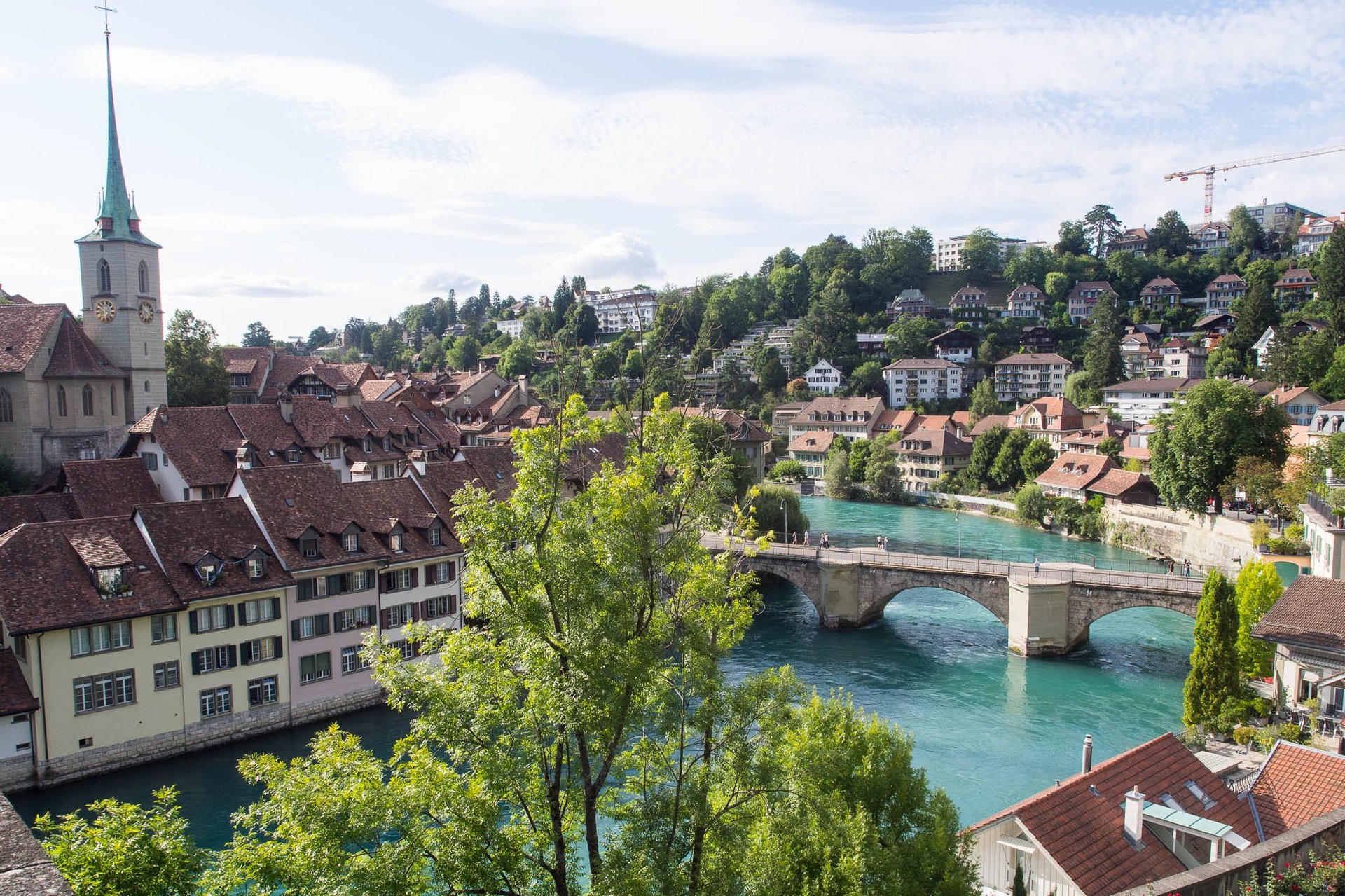
    Panoramic view of River Aare and stone bridge in Bern Switzerland
    The turquoise glacial waters of the River Aare looping around Bern’s Old Town.

    Bern is nestled snugly inside a horseshoe bend of the River Aare, and the water is an astonishingly vivid glacial turquoise. Looking down from near the Nydeggbrücke bridge and the city’s bear park, the view over the red-tiled roofs and emerald river shows off just how clean and naturally integrated Swiss cities are.

    5. Lauterbrunnen Valley — Bernese Oberland, Switzerland
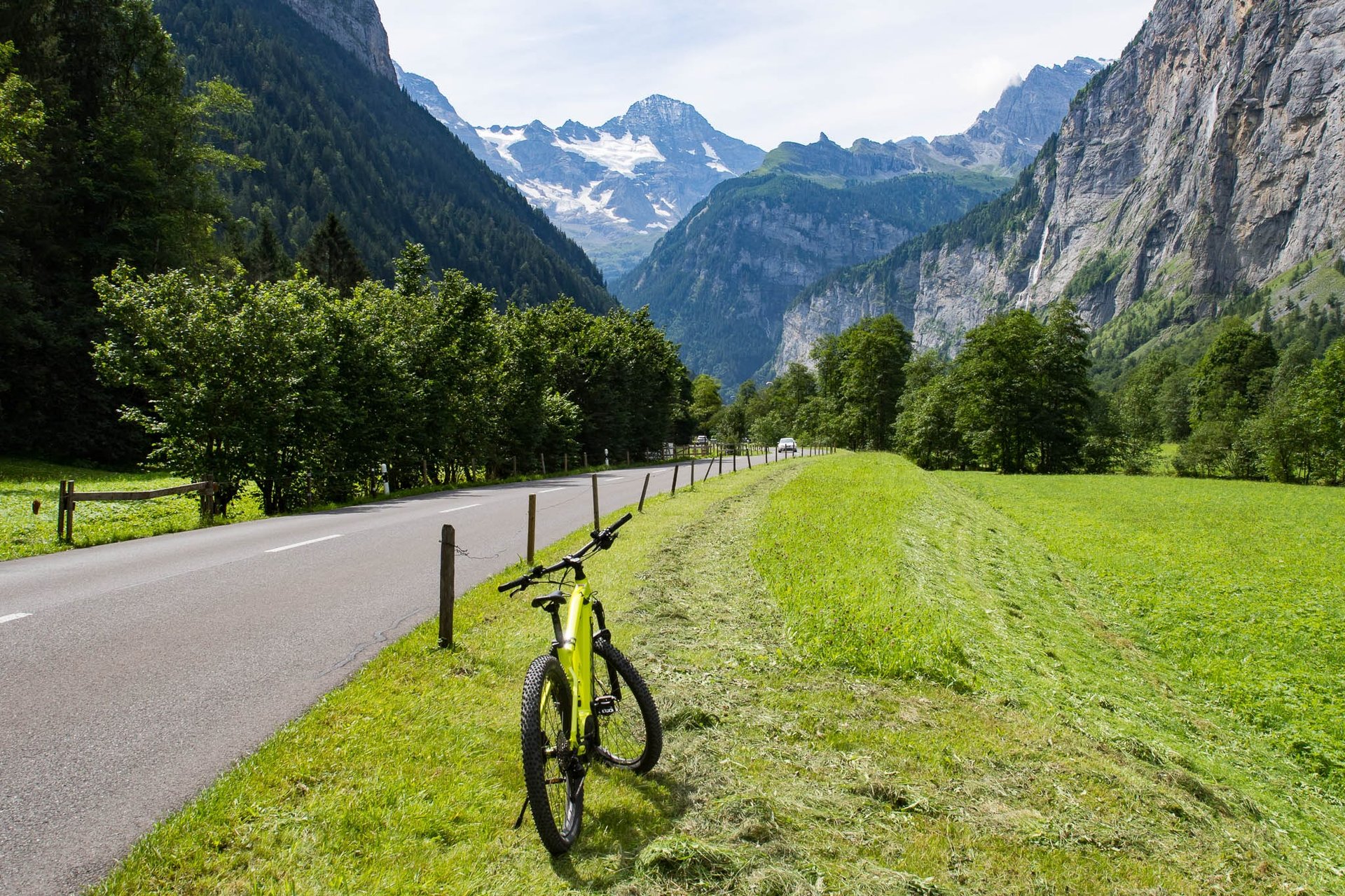
    Bicycle on green grass in Lauterbrunnen valley with snow capped Swiss Alps
    Cycling through the green meadows of Lauterbrunnen with snow-capped alpine summits ahead.

    Next, the rails took me deep into the Bernese Oberland, and Lauterbrunnen was an absolute dream. The valley floor is flanked by sheer vertical limestone cliffs with dozens of waterfalls tumbling down the rock faces, while giant glaciated peaks loom at the head of the valley. Riding a bike down the quiet valley lane with the cool mountain breeze in my face was easily one of the highlights of the whole trip.

    6. Harder Kulm Viewpoint — Interlaken, Switzerland
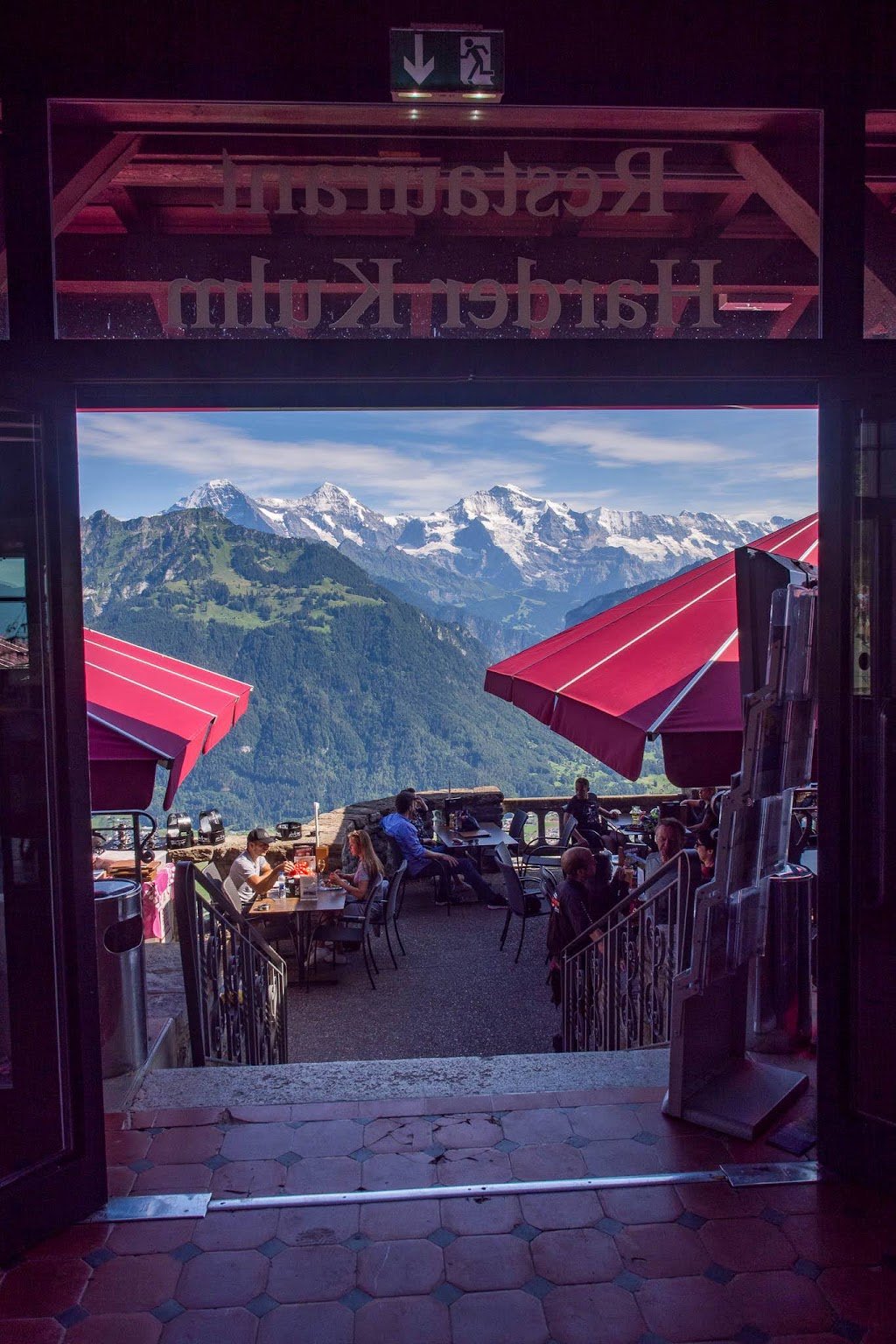
    Doorway view of Restaurant Harder Kulm overlooking snow capped Swiss mountain peaks
    Looking out at the Eiger, Mönch, and Jungfrau peaks through the doorway at Harder Kulm.

    Interlaken sits right between Lake Thun and Lake Brienz, and taking the steep funicular railway up to Harder Kulm rewards you with one of Switzerland’s finest viewpoints. Standing outside the restaurant terrace, you get an unobstructed panoramic view across the lakes and directly into the legendary Swiss triumvirate: the Eiger, Mönch, and Jungfrau.

    7. Maria-Theresien-Straße — Innsbruck, Austria
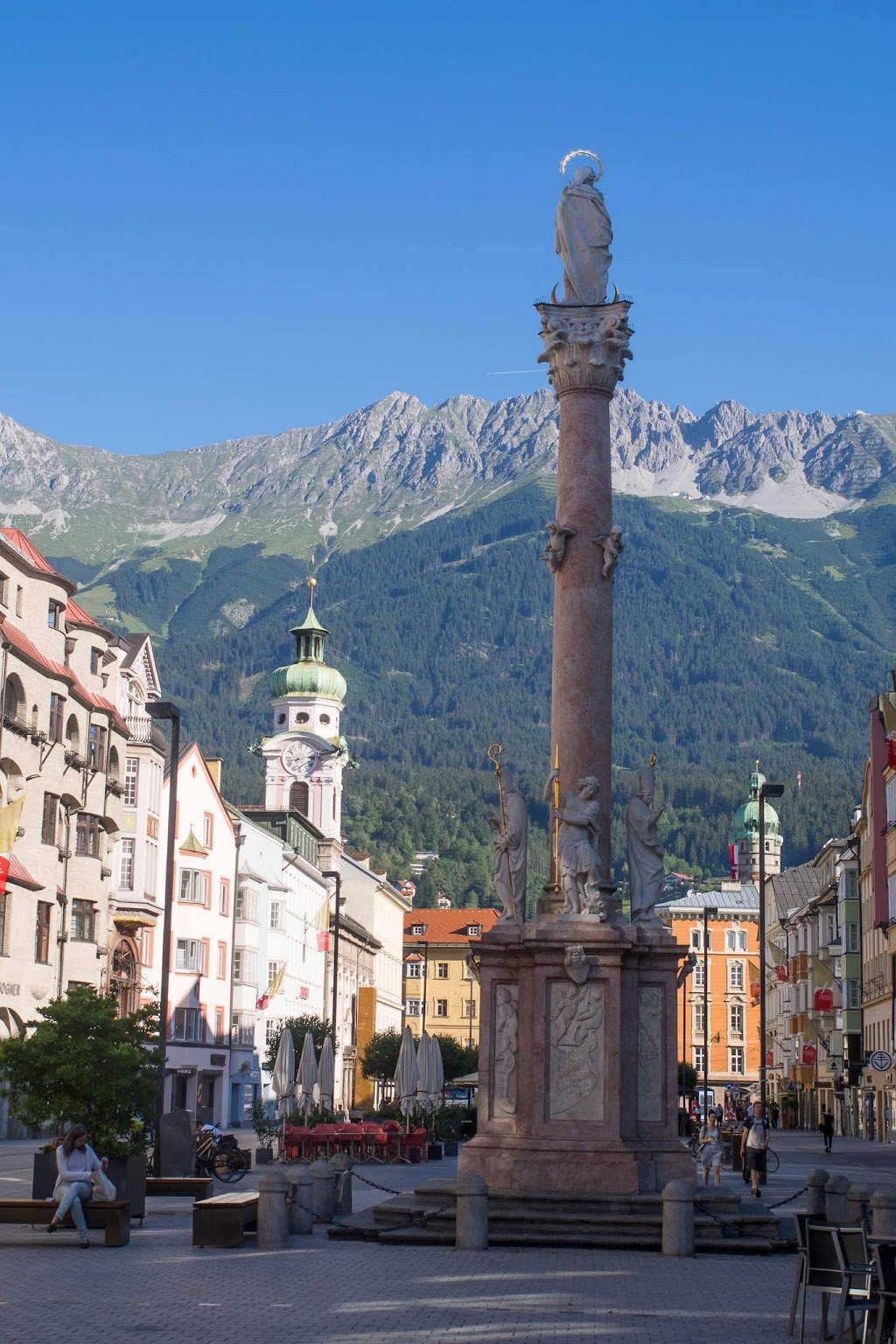
    St Anne Column in Innsbruck Austria with dramatic Nordkette Alps backdrop
    St. Anne’s Column on Maria-Theresien-Straße with the Nordkette Alps towering overhead.

    Heading east into Austria, the train carried me straight into Tyrol and the alpine hub of Innsbruck. Walking down Maria-Theresien-Straße past the 18th-century St. Anne’s Column (Annasäule), it is wild to see the jagged, colossal limestone wall of the Nordkette mountains rising up directly behind the colorful city buildings.

    8. Top of Innsbruck (Hafelekar) — Innsbruck, Austria
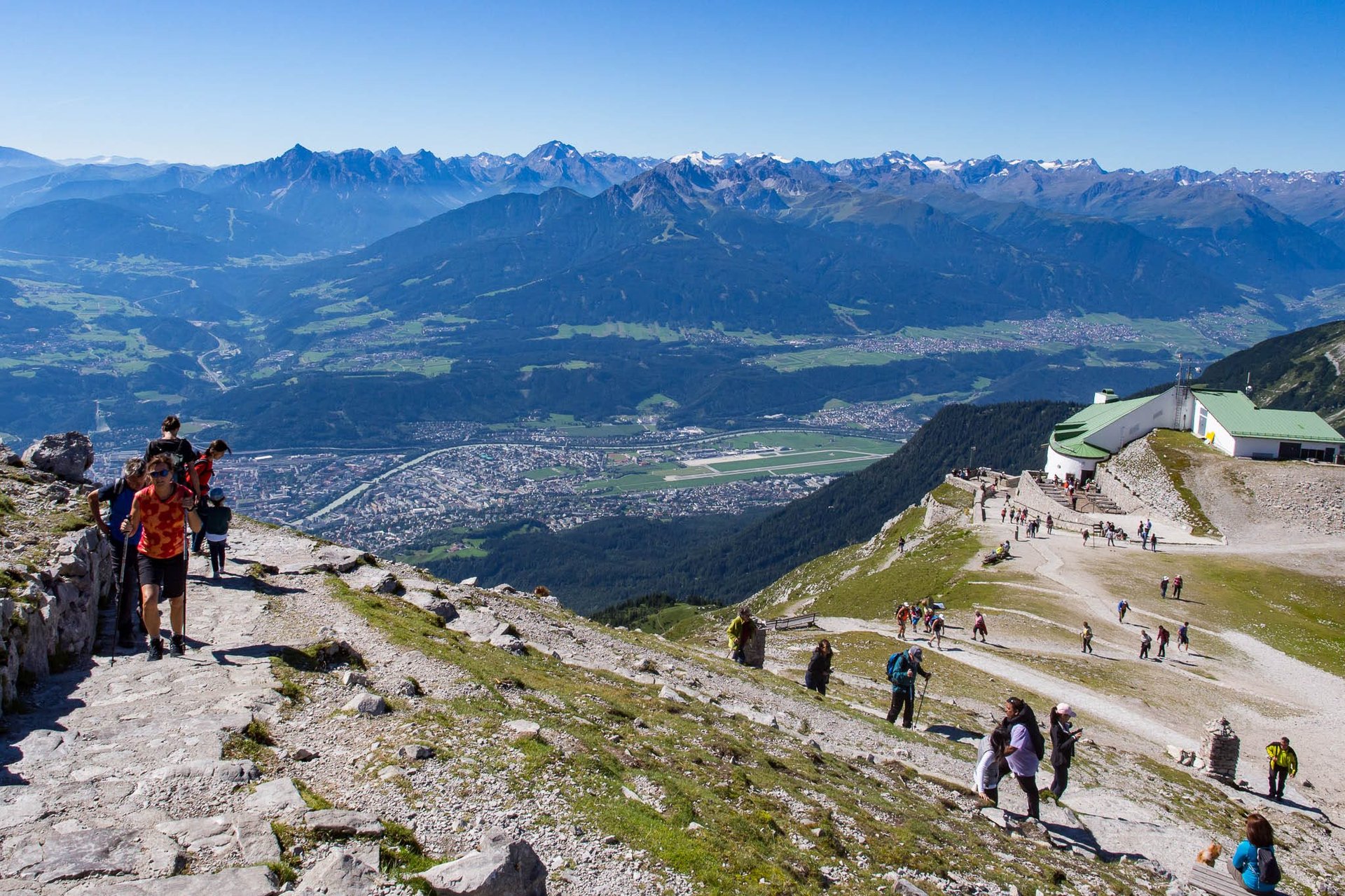
    Hikers on mountain trail at Top of Innsbruck Hafelekar overlooking valley
    Hikers walking the high alpine trail along the Nordkette ridge above Innsbruck.

    One of the coolest things about Innsbruck is that you can jump on a funicular and cable car right in town and be standing at Hafelekar at over 7,400 feet in roughly twenty minutes. Hiking along the rocky ridge trail gives you 360-degree views looking into the rugged Karwendel wilderness to the north and the entire Inn River valley and airport below to the south.

    9. Hallstätter See — Hallstatt, Austria
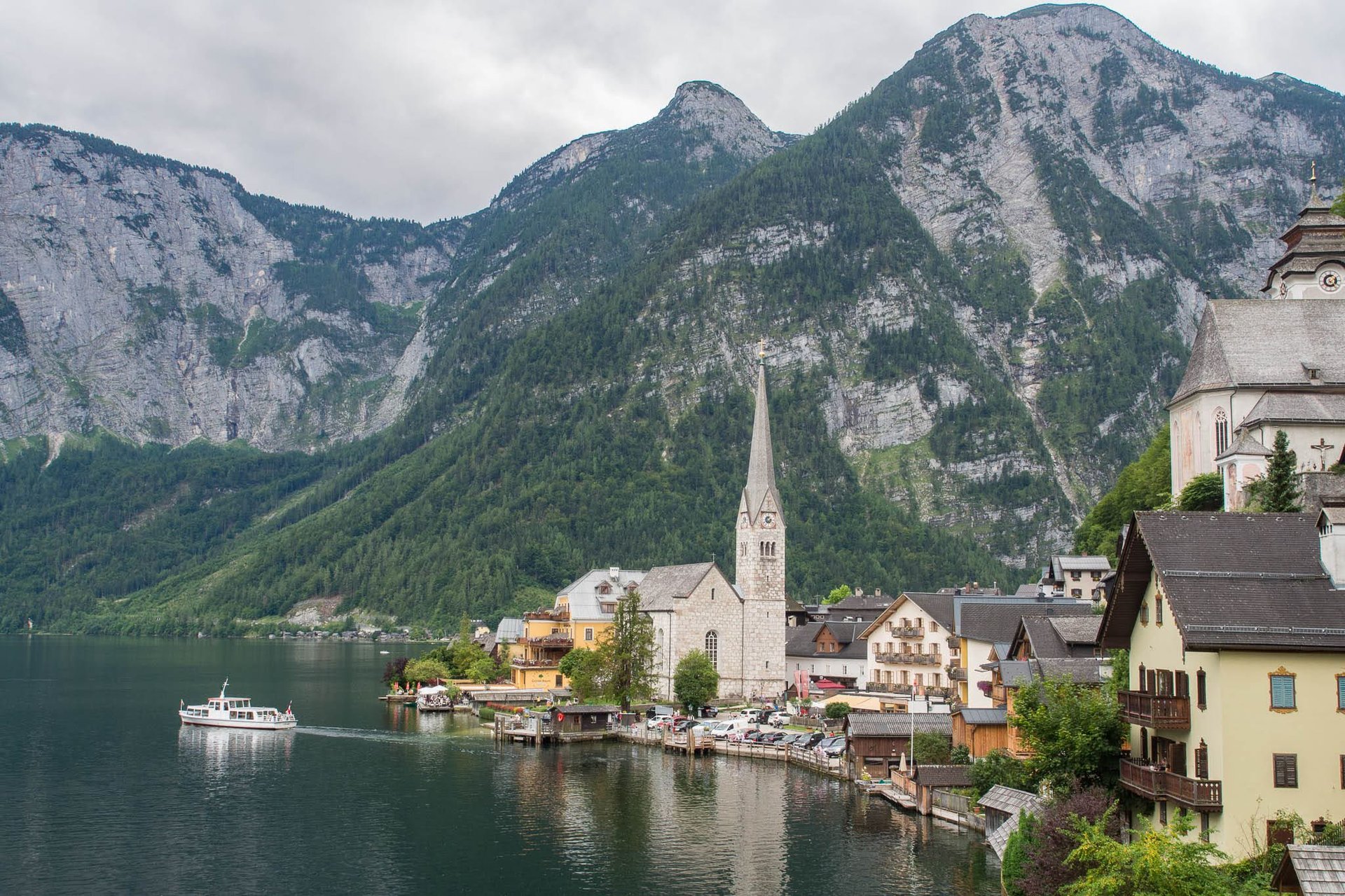
    Iconic view of Hallstatt Austria church tower lake and ferry boat
    The iconic postcard view of Hallstatt reflected in the calm waters of Hallstätter See.

    Getting to Hallstatt by train is half the fun because the station is situated on the opposite shore of the lake. To get to town, you hop on the little wooden passenger ferry that chugs across Hallstätter See. Seeing the 16th-century wooden alpine cottages stacked against the mountain slope with the church spire reflected in the water felt like floating into a postcard.

    10. Hallstatt Skywalk — Hallstatt, Austria
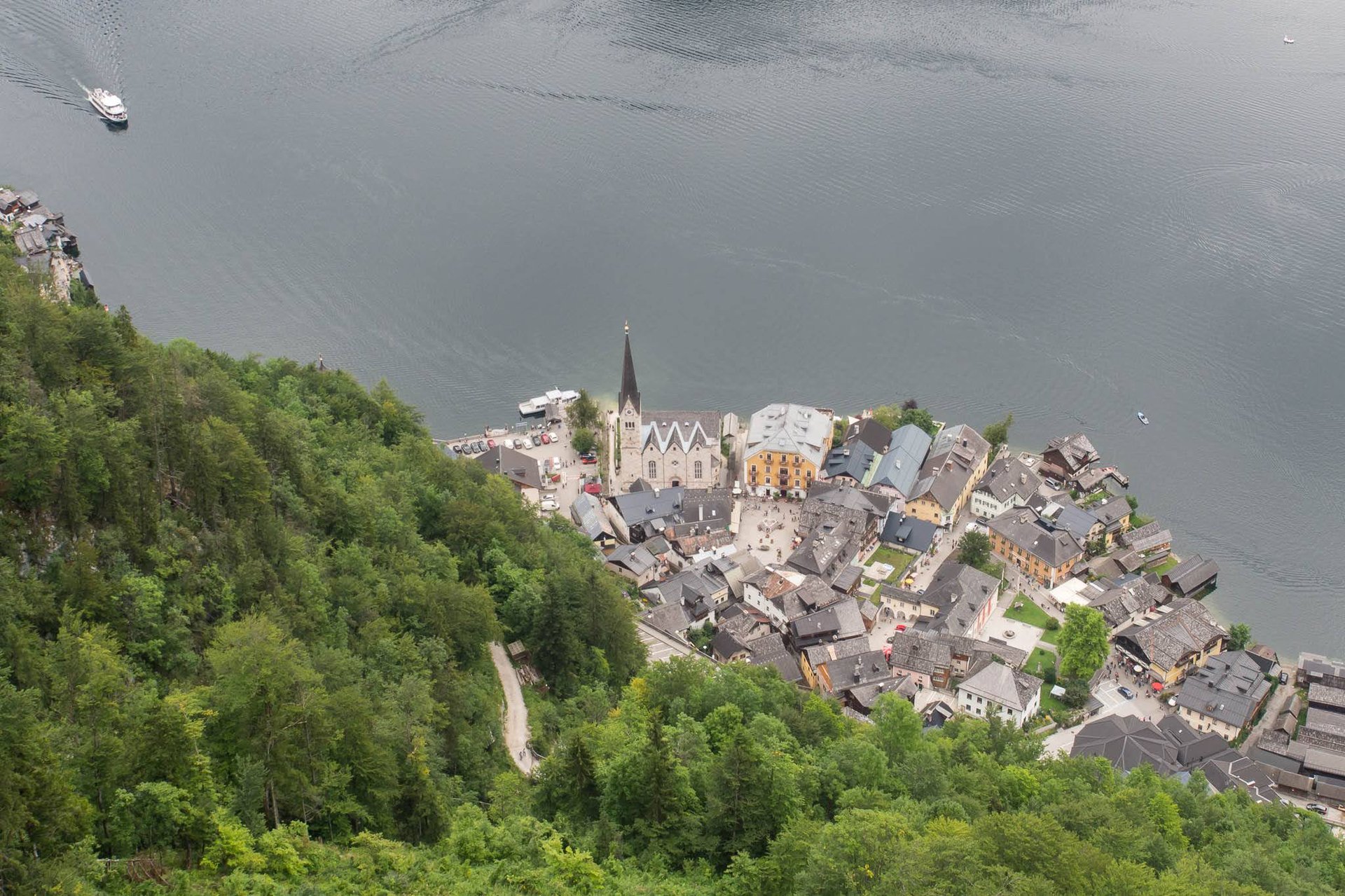
    Aerial view of Hallstatt village and lake from the Skywalk observation deck
    Looking down onto Hallstatt’s rooftops and church from the Skywalk platform 350 meters above.

    Taking the funicular up the salt mountain behind town brings you to the Hallstatt Skywalk, a triangular cantilevered viewing deck that hangs out 350 meters above the village. Walking to the point gives you a dizzying, bird’s-eye view of the tiny town and the dark alpine waters of the lake.

    11. Hohensalzburg Fortress — Salzburg, Austria
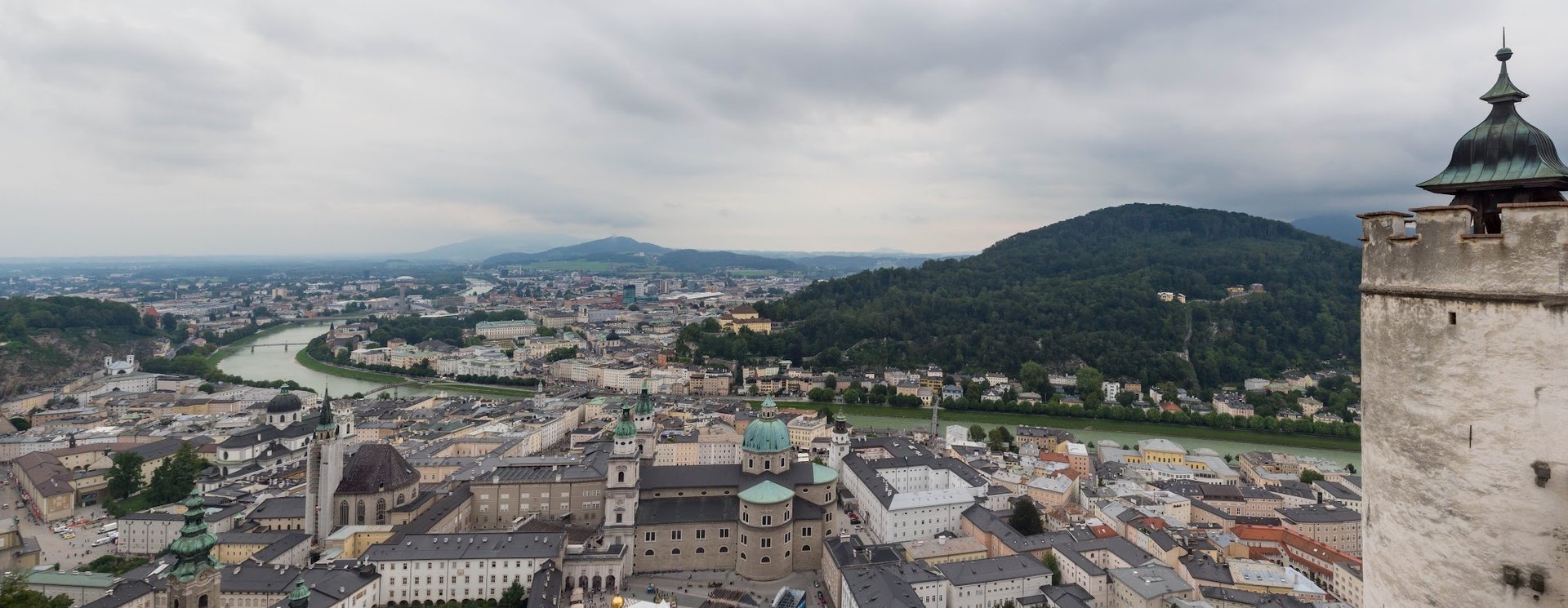
    Panoramic view over Salzburg domes and river from Hohensalzburg Castle
    Panorama of Salzburg’s domes and the Salzach River from the ramparts of Hohensalzburg Fortress.

    In Salzburg, I spent a good chunk of time exploring Festung Hohensalzburg, one of the largest and best-preserved medieval castles in Europe. Perched on top of the Festungsberg, the fortress battlements offer sweeping panoramic views over the church spires, baroque domes, the curving Salzach River, and the Austrian hills beyond.

    12. Ponte Vecchio — Florence, Italy
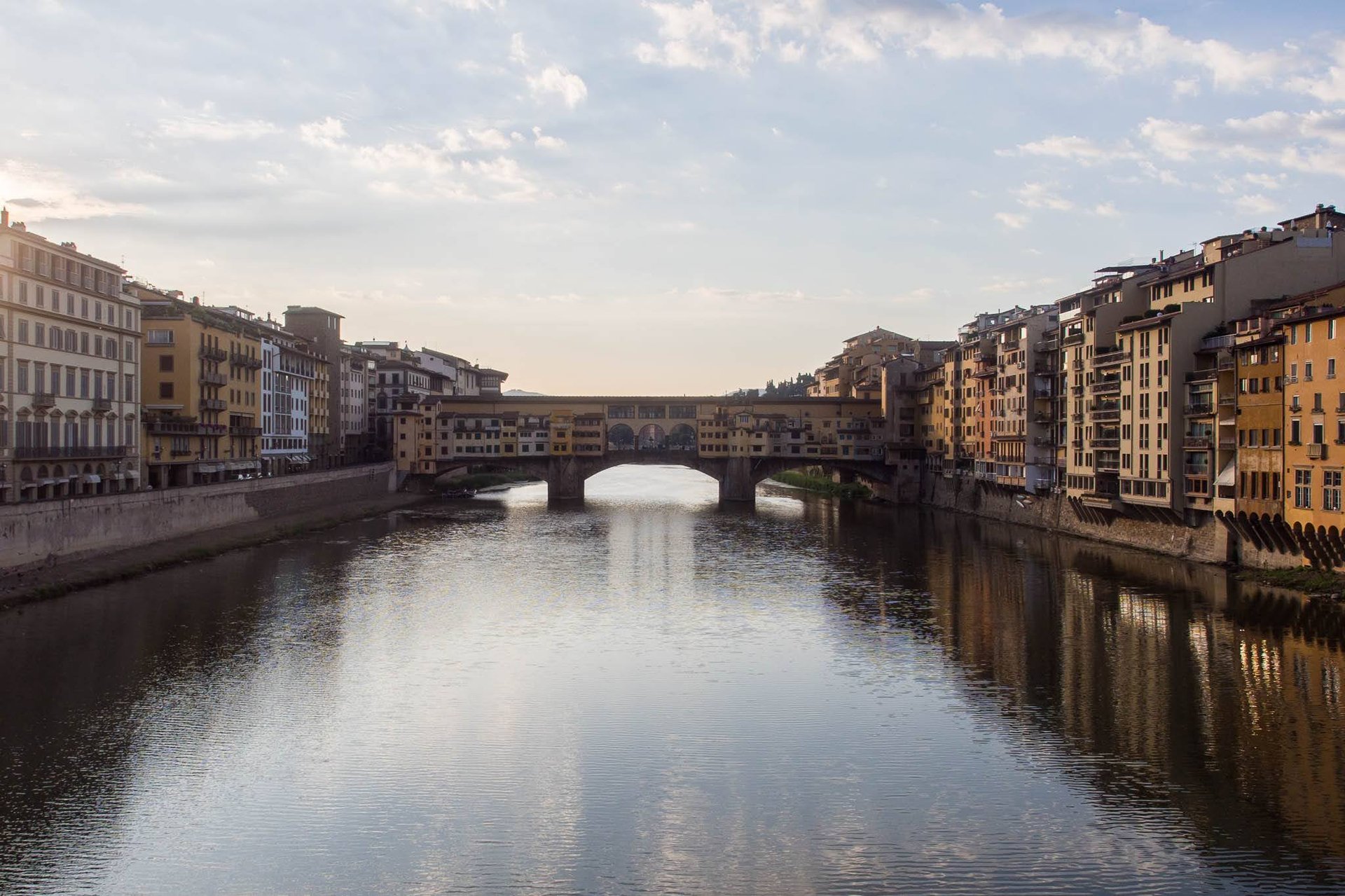
    Ponte Vecchio reflection in the Arno river Florence Italy
    Ponte Vecchio spanning the Arno River in Florence at golden hour.

    After Austria, the train carried me south through the Brenner Pass and straight into Italy. In Florence, walking along the banks of the Arno River to see the Ponte Vecchio in the late afternoon was unforgettable. The medieval closed bridge with its overhanging goldsmith shops reflected peacefully on the calm water as the sun went down.

    13. Florence Skyline from Piazzale Michelangelo — Florence, Italy
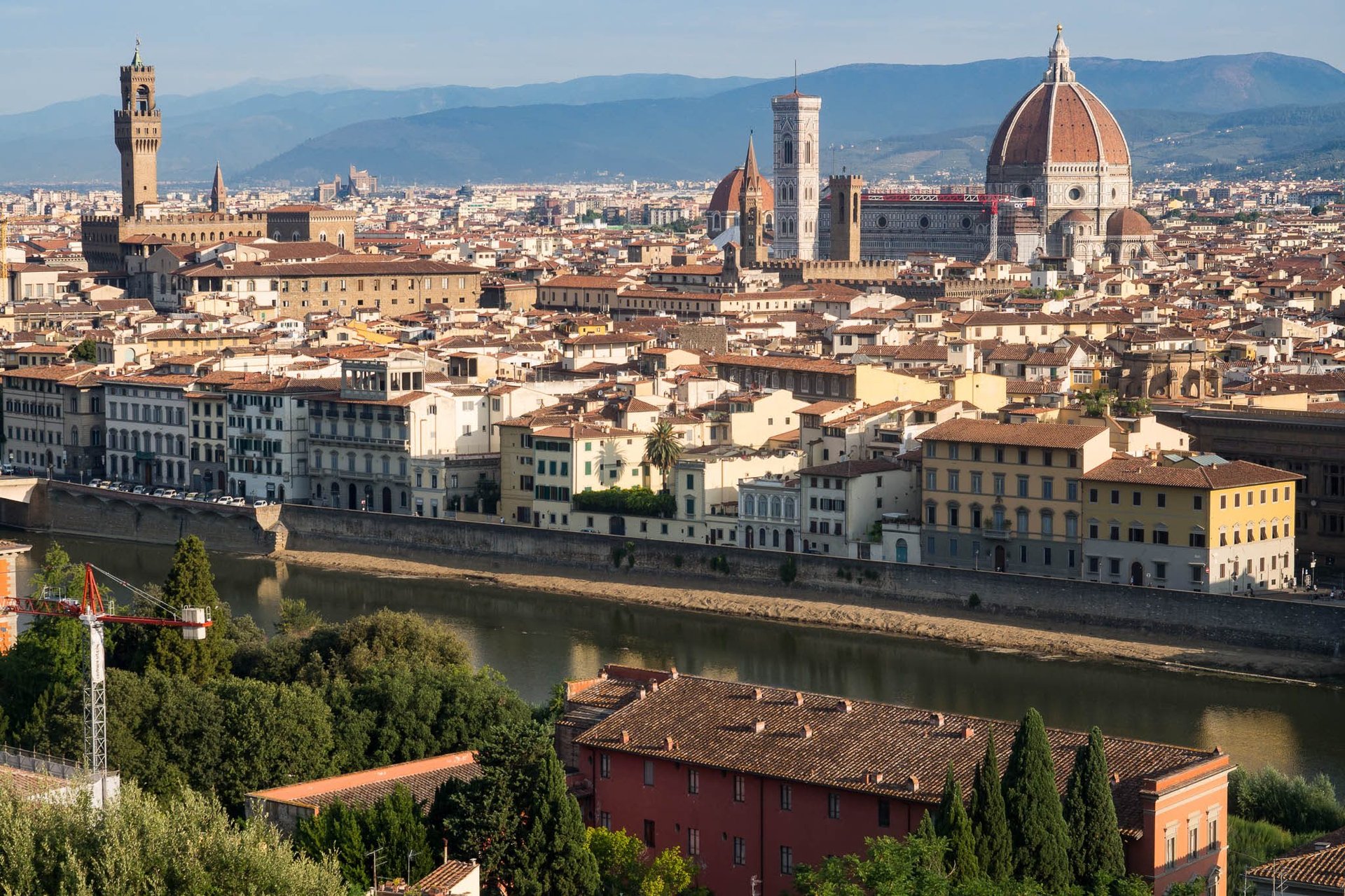
    Panoramic view over Florence Italy with Duomo dome and Palazzo Vecchio
    The iconic Florence skyline from Piazzale Michelangelo, featuring Brunelleschi’s Duomo dome.

    For the quintessential view of Florence, I climbed up across the river to Piazzale Michelangelo. The entire Renaissance city stretches out in front of you—Brunelleschi’s red-tiled Duomo dome, Giotto’s Campanile, and the fortress-like tower of Palazzo Vecchio, all backed by the rolling Tuscan hills.

    14. Piazza dei Miracoli — Pisa, Italy
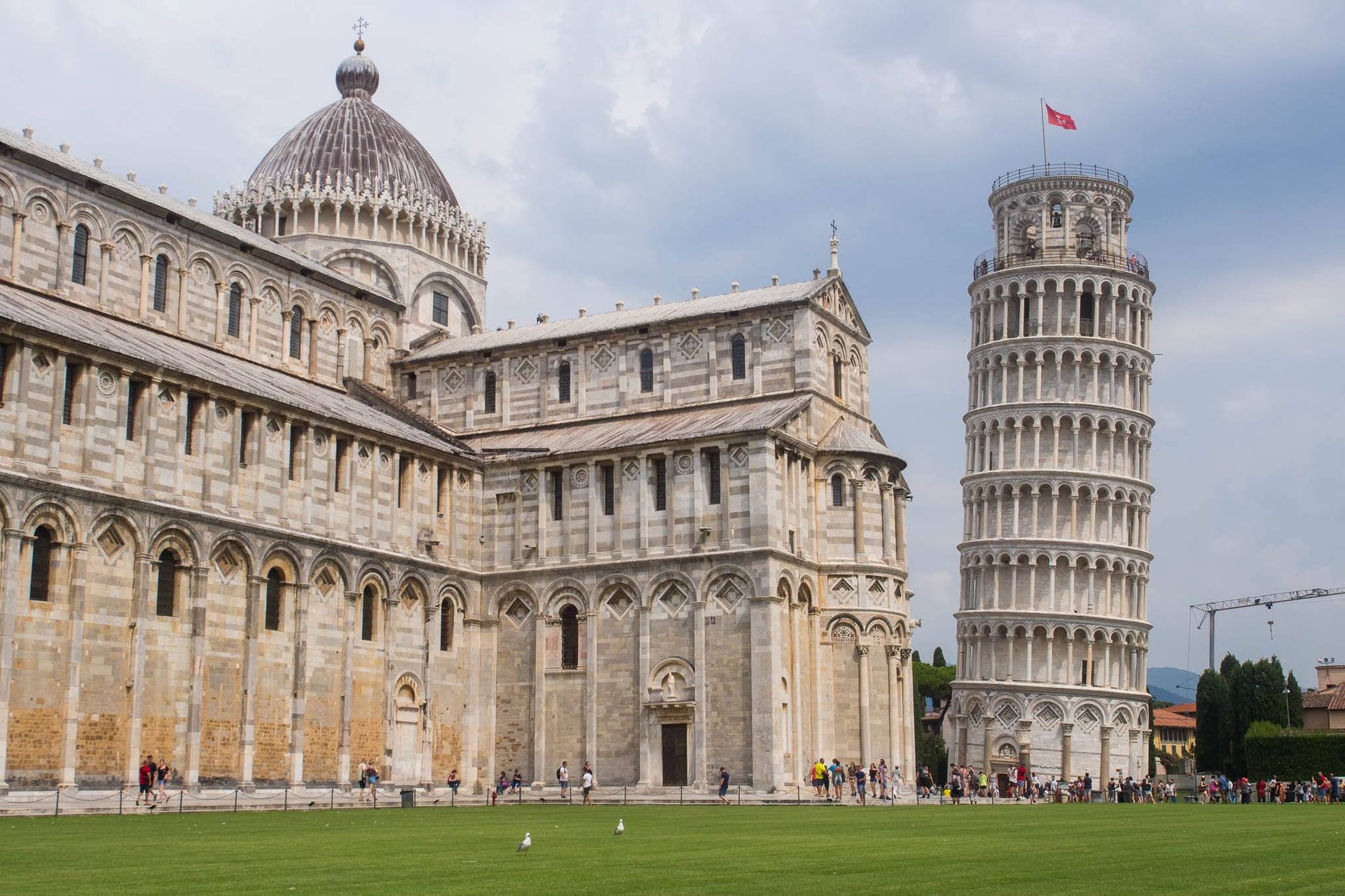
    Leaning Tower of Pisa and Pisa Cathedral on green grass lawn
    The Leaning Tower of Pisa and the Pisa Cathedral standing on the green lawn of Piazza dei Miracoli.

    A short hop on an Italian regional train brought me over to Pisa. While dodging tourists pretending to hold up the tower is unavoidable, seeing the Piazza dei Miracoli in person is genuinely impressive. The gleaming white Carrara marble of the Romanesque Cathedral and the Leaning Tower stands out brilliantly against the manicured green lawn.

    15. Manarola — Cinque Terre, Italy
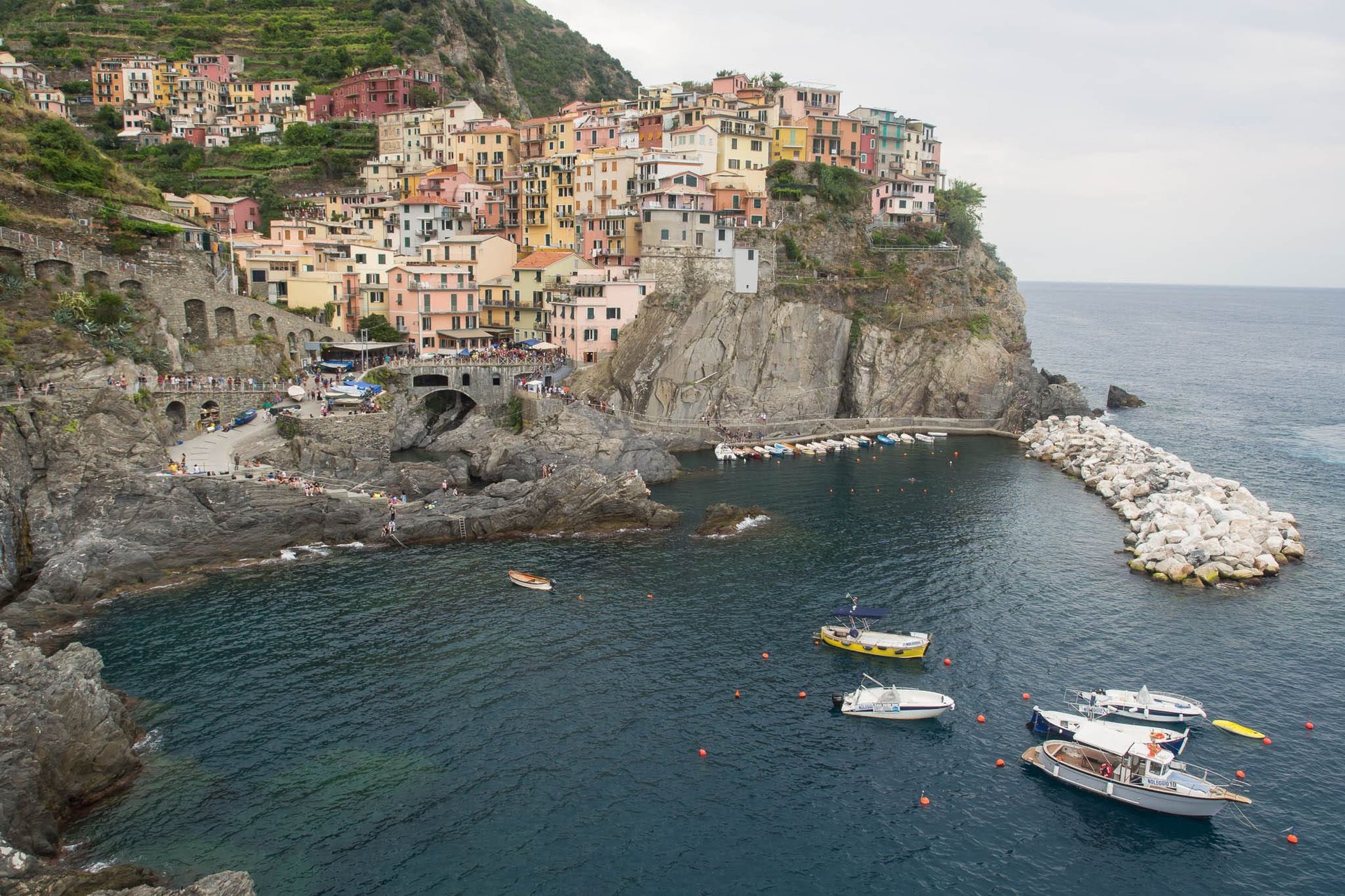
    Cliffside village of Manarola Cinque Terre Italy overlooking the sea
    The pastel-colored cliffside village of Manarola in Cinque Terre overlooking the Mediterranean.

    The Italian Riviera was one of the legs I was most eager to explore. In Cinque Terre, the train runs right through tunnels carved into the seaside cliffs, connecting five pastel fishing villages. Manarola is easily one of the most striking, with colorful houses stacked precariously on a rocky headland dropping directly into the Mediterranean.

    The Completed Itinerary & Reflections
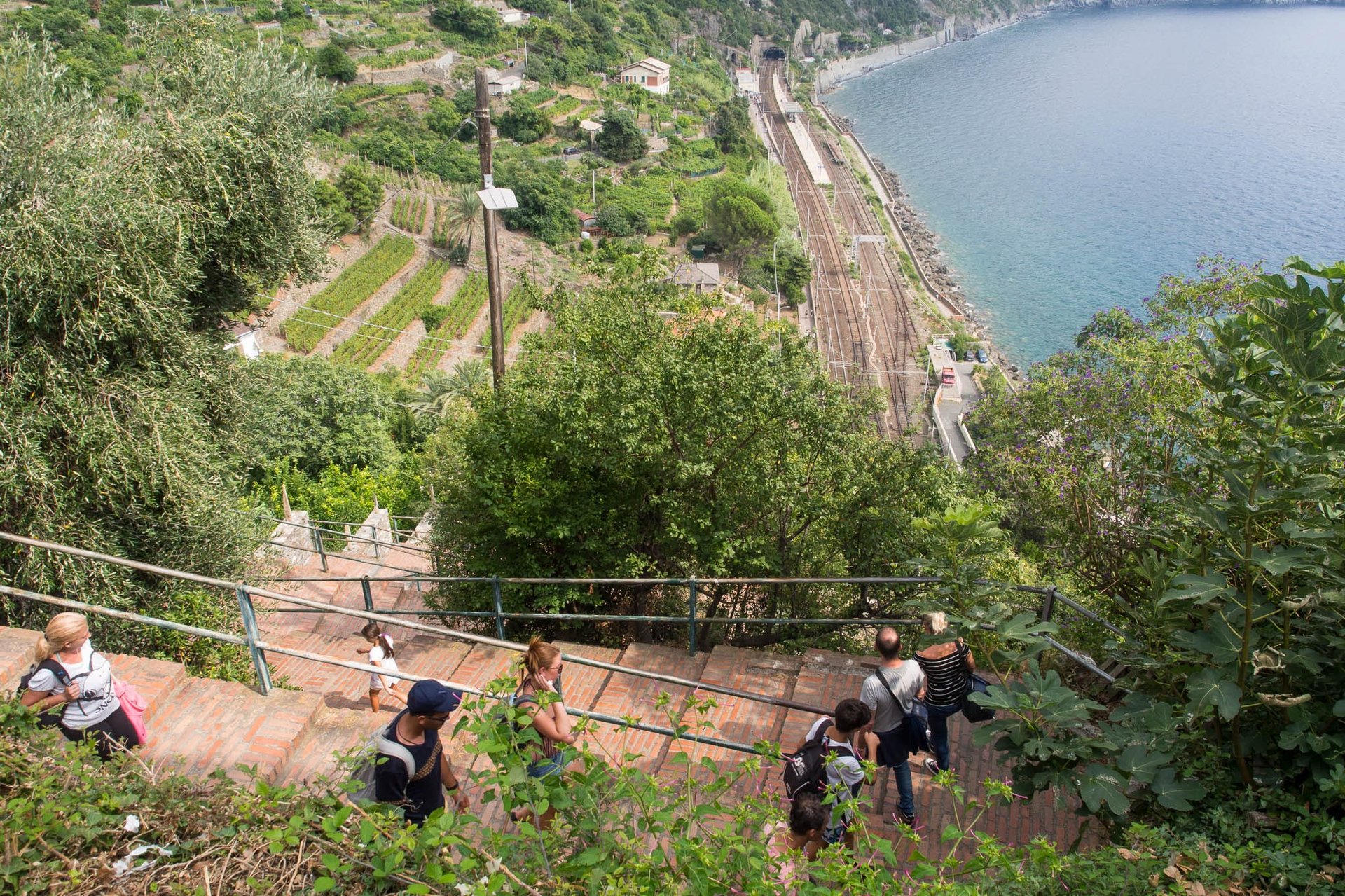
    Staircase to Corniglia with train tracks along the Mediterranean coast
    The coastal train tracks of Cinque Terre running right along the Mediterranean beneath Corniglia.
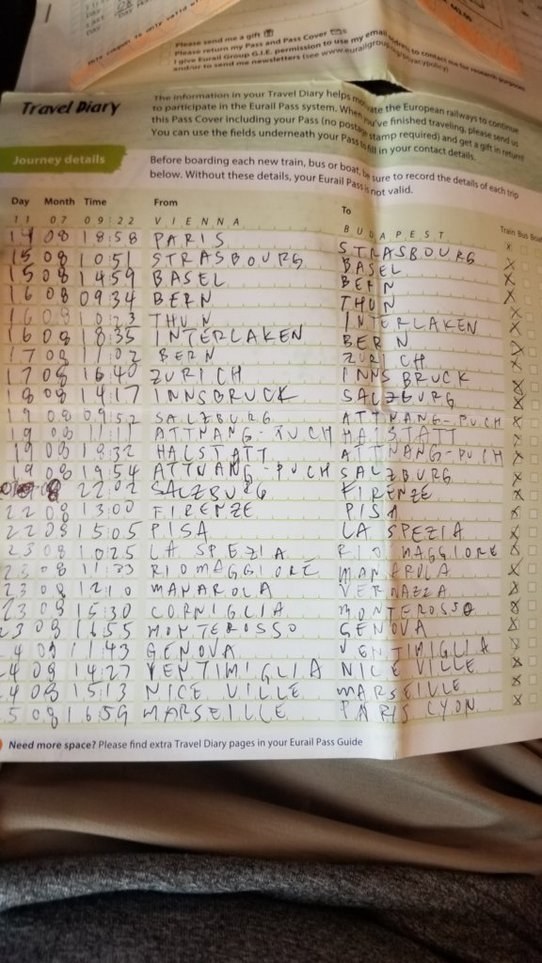
    Handwritten completed Eurail pass travel diary logging 26 train rides across Europe
    Every line filled out: my completed Eurail Travel Diary tracking 26 train journeys across France, Switzerland, Austria, and Italy.

    Looking back at my completed Eurail Travel Diary—from the initial sprint out of Paris to Strasbourg, winding through the Swiss Alps and down to Lake Thun, over to Innsbruck and Salzburg, boarding the overnight sleeper down to Florence, hopping between the five villages of Cinque Terre, cruising past the French Riviera via Monaco and Nice, and finally heading back into Paris Gare de Lyon—every single line on the pass was completely filled.

    Twenty-six train legs in total across four countries. Looking at that worn-out paper pass, I definitely think I got my money’s worth.
  • glacier point snow backpacking

    My first snow backpacking trip to Yosemite was to Dewey Point almost exactly six years ago. Ever since that first trip I’ve been wanting to do the much longer trek to Glacier Point. This week I was finally cross the trip off my bucket list.

    The trip was sort of a last minute decision. The winter season at Glacier Point typically ends at the end of March, but during the last six years (many of which were drought years) the area hadn’t even opened due to lack of snow. So I didn’t know when I would have another opportunity to do this trip. The one cause for hesitation was the forecasted snow storm. In truth I wasn’t too worried about having to snow shoe throw snowfall or spend the night in a tent during a snow storm, but I was definitely a bit worried about having to drive the curvy mountainous roads into Yosemite in snowy conditions. When I checked the forecast, it looked like Friday night would be clear, so I decided to book a room at the Yosemite View Lodge and drive into Yosemite Friday evening before the snow storm. Thankfully my friend Vishal decided to go at the last minute as well. I’ve done solo snow trips before, most notably that trip to Dewey six years ago, but it’s definitely better with a friend, even in a well traveled area like Yosemite.

    The drive to the Yosemite View Lodge was uneventful. The lodge itself was surprisingly nice. It’s situated in a river canyon with spectacular granite walls that tower over the lodge, and the gurgling of the river drowns out all other sounds. It’s almost a mini Yosemite Valley of its own, even though it’s actually situated a bit far away from the crowds of tourists at the real Yosemite Valley. As far as I could tell the lodge were the closest accommodations to the Yosemite Ski area, which was the starting point for our hike.

    The Yosemite Ski area was about a forty minute drive from the Yosemite View Lodge. As we started to gain elevation and get closer to the ski area a light drizzling rain started to turn into a heavy snow. We arrived a bit before the ranger station opened, so we decided to each grab a breakfast burrito at the ski lodge’s cafeteria. We had decided to pack light and not bring a stove, so the breakfast burrito would be our last warm meal for a couple days (though it would prove to have consequences later in the day).

    Snowshoes and winter packs for a snowy trek towards Glacier Point.

    The hike towards glacier point started off relatively easy despite a bit of snowy weather. There were a fair number of cross country skiers and snow shoe trekkers going in the same direction. It seemed that most of the cross country skiers were doing a day trip out to Glacier Point, whereas most of the other people in snow shoes were taking shorter trips out to either Dewey Point or one of the other vista points out before Glacier Point. Glacier point is kind of a long trek in snow shoes, but for the most part we actually didn’t even need the snowshoes since most of our path was machine grooved hard pack.

    Half dome peaking out through the clouds

    It was overcast and snowy for most of the morning, but by afternoon the skies started to clear up. As we got closer to Glacier Point we were treated with an amazing view of Half Dome peeking out through the clouds.

    Buried bathrooms

    The breakfast burrito we ate in the morning turned out to be a rather bad choice. There were bathrooms along the way but most of them were closed. Luckily there was a bathroom near Glacier Point that was open. Unluckily one of us couldn’t hold out until we got there.

    Campsite and refreshments

    We arrived near Glacier Point by late afternoon. Thankfully there was enough sunlight out for us to setup a campsite. There actually wasn’t a lot to setup, Vishal and I both had tents that went up within minutes. We were planning to dig out a seating area, but we ended up being lazy and just sat down in the snow and drank some beer and wine. There wasn’t much else to do, thankfully we brought enough alcohol to make me sleepy.

    Sunrise at Glacier Point

    The main reason why this trip was on my bucket list was to catch the sunrise over the Yosemite Valley. So we woke up early to catch the sunrise before packing out. This had been a bucket list trip for a long time and so I was glad to finally cross it off the list. It’s a bit of a trek to get out to Glacier Point in snowshoes, so I’m not sure if I’d want to do it again, though I might think about trying it in cross country skis someday.

  • the agony

    The Agony ride is an annual charity bicycle ride and fundraising event for Christian Encounter Ministries, a home and school for troubled youth. My friend Zoya invited me to ride the Agony every year for the past few years, but I’ve always had an excuse to not ride. Last year I ran (ok more like waddled) the San Francisco half marathon, but I told Zoya I’d rather have done the Agony ride. I forget what my excuse was the year before that. This year I didn’t have an excuse.

    The ride starts in a town called Loyalton, which I had never heard of. When I searched for Loyalton the first page of results had the site “Loneliest Town in America.” I suppose that’s not a bad thing– I mean you’d want a bike ride to be in a place without much car traffic…

    The ride starts at the elementary school in the lonely town of Loyalton, which also serves as the main SAG (rest stop in bicycle terms) area. There are two more SAG stops, one at Vinton and one at Beckwourth, which actually seemed even more lonely than Loyalton. In fact there’s literally nothing at Beckwourth– the ride organizers bring in trailers and RVs and setup a mini camp there. The entire Agony ride consists of riding to Vinton, then riding to Beckwourth, then riding back to Loyalton. You repeat this loop until 24 hours are up or you feel like giving up.

    I had pledged to ride 200 miles, but I honestly wasn’t expecting to ride all those miles. The longest training ride I had done was maybe 50 miles, so I was fully expecting my legs to give out before the 24 hours were up, well short of 200 miles.

    The ride starts at 1pm on Friday, but check-in starts at 9am. Loyalton is about two and a half hours from my house, so to arrive at 9am I had to wake up at 6am. I woke up, barely functional, not having slept well the night before. I had stayed up late looking for random bike gear, stuff like arm warmers and bike lights that I rarely use, so I have no idea where they’re stashed away. And I didn’t sleep well, I tossed and turned wondering if I was missing some important gear.

    I arrived at around 9am. I was pretty tired, and I hadn’t even started riding yet. I ended up parking next to a guy named Chris. It turned out that it was also Chris’s first agony ride, and he had really only started road biking 3 months ago. I’m pretty terrible at chatting people up, but Chris was really friendly, and talking to him put me at ease. I didn’t really know any other riders at the event, so I stuck with him at the pre-ride lunch. We ended up sitting next to Beau and Aaron. It was also Beau’s first Agony ride, but Aaron had ridden it before. We asked him for advice, and his response was to basically pace yourself and ride at an easy pace at the beginning so you don’t burn out before the end.

    That was sort of my plan. I planned to ride a relatively easy 15 mile per hour pace. I figured at that pace my goal of 200 miles would take 13 or 14 hours, so there was plenty of time to take long breaks at SAG stops and even get in a good 6 or 7 hours of sleep. The ride started at 1pm, so I figured I could ride about 8 or 9 hours until dark, then try to sleep, and then ride the rest in the morning. I didn’t really want to ride much at night, I wasn’t sure how many hours the batteries on my lights would last, and besides riding on unfamiliar country roads in darkness sounds kind of scary.

    At 1pm the riders gathered to start. I lined up next to Chris. I figured we would at least start out at a similar pace.

    Because we all started en masse the cyclists form a long line leaving Loyalton. But the line would soon break up as the fast riders move to the front. I had heard some riders say their goal was 400 miles– at that pace they’d have to average close to 20mph, which to someone who doesn’t bike maybe doesn’t sound all that much faster than the 15mph I was planning to ride, but believe me it’s a huge difference.

    I ended up riding with Aaron, Beau and Chris, the only people who I had met before the ride started. At times we were joined by a John and another Mike, but the core of A, B, C, and me stuck together for the entire first day.

    As I mentioned earlier, the Agony ride is a charity event for Christian Encounter Ministries, which obviously is a Christian organization, so I guess it’s presumed that most of the riders are Christian. While we were riding Aaron had asked what our favorite verse was. I wouldn’t say it’s my favorite verse, but the verse that stuck out to me was from Ecclesiastes, which my small group had been studying. It’s “A cord of three strands is not easily broken.”

    The verse seemed relevant at the time. The route we were riding was completely flat, but at times there were stiff winds. After a certain point endurance cycling becomes more of a mental exercise than a physical exercise. It takes a certain mental resolve to keep pushing when your body is agony. Nothing breaks that mental resolve faster than riding against a strong wind. But because we were riding together and taking turns pulling (being the rider in the front), the wind wasn’t breaking my resolve. A cord of three strands is not easily broken; a group of four bikers riding in a line is not easily broken (by the wind) either.

    At around sunset I took this picture of the silhouette of our group riding together. After 7:30 pm you can’t leave a SAG station without your lights. It was getting pretty close to that time. I figured I’d pick up my lights and arm warmers and then ride one more loop before calling it a night.

    After we had finished our loop after sunset, it was pretty dark. But A,B, and C wanted to continue riding at least one more loop. I was pretty wary about riding at night, but with them I felt comfortable enough. I was worried about running out of batteries, and it turns out my fears were justified. I ran out of batteries halfway between the leg from Vinton to Beckwourth, but thankfully riding with three other people with powerful lights I was able to see well enough to ride to the Beckwourth SAG stop. Thankfully they had batteries at the SAG stop.

    We arrived back at the Loyalton SAG stop at 4am having completed 4 loops together for a total of 152 miles. At this point I was exhausted and couldn’t ride any more. It turns out the rest of the group was too tired to move on too. At Loyalton there were sleep rooms, and we all found spots to turn in for the night. I thought it would take me a while to sleep, since my heart rate was high from riding, but I crashed–no wait, bad choice of words for a cyclist–I knocked out as soon as I lay down.

    I guess I was the most exhausted, because I woke up a little past 7am and found that A,B, and C were already gone. I ate a leisurely breakfast, stretched, and hopped back on the bike a bit before 8am. At this point there was just under 50 miles left to reach my goal of 200, and I had a little over 5 hours to do it. Plenty of time. Whereas the day before I had spent the entire day riding with other people, I spent most of the second day riding alone. The area around Loyalton really does look like it could be the loneliest town in America. It’s an isolated valley, surrounded by the Sierra foothills on all four sides. Thankfully though, because of the way the ride is set up, you see people riding on the other side of the road pretty often, and you often get a wave or a cheer from them. Because I was alone I rode at my own pace, kind of slow at first, but as I started to approach 200 I picked up the pace, averaging between 18-20mph on my last leg before 200.

    I arrived at the Vinton SAG stop with 202 miles on the odometer and a little over an hour left before the 1pm cutoff. I had met my goal, and I was feeling ecstatic. At the SAG stop there was one other rider, Jeffrey. He seemed pretty tired, but I asked him if he wanted to ride with me and try to ride one last leg towards the Beckwourth SAG stop.  We ended up not quite making it to Beckwourth, so we stopped on the side of the road when his alarm went off at 1pm. We were picked up by a support vehicle and taken back to Loyalton for the post ride meal and checkout. It turns out it was Jeffrey’s first Agony ride as a rider, but he was a SAG volunteer a few times before when he was a student at Christian Encounter Ministries. I was thankful that I got to ride with him for the last leg and hear his story. I had known that the Agony ride was for a good cause, but hearing real stories about CEM made it feel all the more worthwhile.

    Here’s a picture of me (in front) riding with A, B, C, and John. Notice I’m sorta smiling. This picture was taken pretty early on. I’m sure I was smiling less and less the farther I rode. By the end I could say I truly felt agony, my whole body was in pain. But I could honestly say that I enjoyed myself as well. The camaraderie and support were incredible. Out of all the rides I’ve ever done this one had among the best food and SAG support, but more awesome than that was the fact that all the SAG supporters and fellow riders cheered each other on every chance they got.

    My final total for the 2017 Agony ride was 213 miles. I want to thank all of my sponsors. In the end we raised more than $1000 together. To read more about the agony ride, you can go visit the Agony Ride website. And please visit the Christian Encounter Ministries website for more information about CEM.

  • dating data reporting

    I’ve been working in the Data Reporting Office of the California Department of Education for about a year now. The logical and analytical left brain part of me enjoys the challenge of writing SQL statements (SQL is a database programming language) to extract the data needed for reports. The end result of my work is mostly reports filled with numbers. It actually sounds kind of boring when I describe it this way.

    In general I like to do things that tell stories. I think that’s the creative right brain part of me. I like to take photographs and write on this blog, both of which are inherently methods of story telling. I think that’s why after a year in my job I’m still not bored– My work requires logic, but it also tells a story, albeit in a slightly different way. The numbers in the reports I generate tell the story about the successes and failures of education in California. For example, there’s a lot of interest in English learner students in California, and a data set I worked with recently seems to tell the story about how our state is failing to educate these kids– many of them never achieve English fluency.

    On a completely unrelated note, it seems like there’s a lot of interest in my dating life (or actually the lack thereof). So I’ll try to tell the story of it. Unfortunately the usual modes of story telling don’t apply here. I don’t really have any interesting anecdotes to write about, and I don’t take pictures on dates (that would be awkward). But I’ve been on my fair share of first dates, so I suppose there’s enough data and numbers to tell some sort of story about my successes or failures. So that’s what I’ll do. I’ll try write down any statistics I could think of– hopefully at the very least it’s an interesting story.

    Let’s start with some big picture numbers. I’ll start with cost, since that one’s easy. I am currently on 4 dating apps– Match, eHarmony, Coffee Meets Bagel, and okCupid. Coffee Meets Bagel has costed me the least amount of money, a grand total of ZERO dollars. okCupid is free too, but I spent $9.99 for one month of their premium service, mostly out of curiosity, which I’ll explain later on. For both Match and eHarmony I’ve spent about $240 each. Interestingly enough I started both of them about the same time and I initially bought a six month subscription with each of them for around $120. I forgot to cancel both of them, and now I am about a third of the way through my second six month subscription with both. The total cost for each has worked out to about $20 per month.

    In terms of bang for the buck, Coffee Meets Bagel (I’ll call it CMB since I’m tired of typing it out) has been the best for me. (That’s kind of a misnomer– there’s not actually any banging going on, neither literally or metaphorically.) CMB costs the least amount of money yet it has gotten me the most connections. The way CMB works is that you are matched with one profile every day, which you can either like or pass. If your match likes you as well, you are connected and can communicate through their messaging system. On a typical month I seem to connect with two or three matches, though not all of them will lead to first dates.

    Next in effectiveness for me has been eHarmony. Like with CMB there’s some sort of matching algorithm which selects profiles for you to see. It’s slightly less structured than CMB because instead of needing a mutual like to initiate communication, either side can start the conversation by sending questions. In eight months I’ve gone on three dates matched through eHarmony.

    I’ve had little to no success with Match and okCupid, mostly because of apathy on my part. With Match and okCupid you browse profiles and send messages to the people you are interested in. I find that it doesn’t work well for me. It takes a lot of messages to get a response, and even when I do get a few messages going back and forth none have ended with a date. So lately I haven’t been using either of these apps much.

    Actually, now that I think about it, there’s an additional matching “app,” though it’s not a website and doesn’t exist on a smartphone. It’s my family. In terms of dates per dollar it’s actually the most effective, being the only one that’s actually been a financial gain. (My aunt in Korea actually gave me money to go on a blind date.) In terms of number of first dates it ranks pretty highly too, about on par with eHarmony.

    I’m not sure if my results are typical. I have friends who have had success with both Match and okCupid, so my results there are probably not typical. But I’ve heard from several friends that CMB seems to work well for them, and I know of several married couples who have met on eHarmony, so in general it seems like within my circle of friends I’m fairly in typical in leaning towards CMB and eHarmony. In terms of match rate or number of first dates I have no idea if my results are typical, though if I had to guess I’d say they’re probably lower than average. All of the dating apps have a way of selecting preferences for matches, and in these preferences I am very selective which most likely severely lowers the number of potential first dates.

    The reports I generate at work are typically aggregated or filtered based on several demographics– typically gender, race, age (or more likely grade), location (typically county or school district) and subgroup (typically these include demographic information like if a student is homeless or a foster child.) Similarly with these dating apps I filter my matches based on gender (females only please), race (Asian or Pacific Islander), age (25-35), location (typically just far enough to include the Bay Area) and subgroup (typically it’s Christian, never married, no kids currently, non smoker).

    I don’t have any hard data on this, but I’m fairly certain my stringent preferences shrink the potential number of first dates significantly. The only thing I have resembling a statistic comes from okCupid. I briefly mentioned earlier that I paid $10 for a month of premium on okCupid, which they call A-List. okCupid lets you ‘like’ a profile. You can see a list at any time of the profiles you’ve liked, every single one of them fit the demographics I mentioned earlier, i.e. Asian girl between the ages of 25-35. It also shows you mutual likes for free. At the time (this was several months ago) I had liked a few dozen profiles but had only a single mutual like. I had twenty people who had liked my profile. If you pay for A-list you can see who likes you, so out of curiosity I paid for one month. Something like 95% of the people who had liked me were either white, black or Latino, the one mutual like was the only Asian who had liked me. I guess that’s the (dating) story of my life. The girls I like are not interested in me, and the girls that like me are the ones I’m not interested in…

    Anyways, now we get to the heart of the report, the numbers. The numbers will basically be about whatever I feel like. Like my work reports the numbers will be broken down by demographics. We’ll ignore gender since they’re all female, race will mostly be either Korean or Chinese. I won’t report on age or subgroup (or like we say at work, that data is redacted). Location will basically be Sacramento or other. The numbers are mostly from memory so they may be off by one or two, and if you try to sum up the numbers you won’t get any meaningful result due to missing data (this often happens with work reports too), but hopefully the numbers tell an interesting story.

    Here we go.

    Out of 3 Korean girls that I met for first dates in the greater Sacramento area, 100% were through CMB. 100% were at purveyors of caffeine. Out of those, 2 were at Starbucks, 1 was at a boba place. Only 1 of those went beyond a first date, the 1 that was NOT Starbucks. Clearly Coffee Meets Bagel should not be taken literally…

    Out of 4 Korean girls that I met for first dates outside of the greater Sacramento area but within the US, 25% were from CMB, 25% were from eHarmony and 50% were from family. One date was at a purveyor of caffeine (Starbucks). Out of the original 4 a total of 50% forgot to bring their wallet. Out of those that forgot to bring their wallet I thought 100% of them were really cute. Sadly out of those cute forgetful girls 0% went past a first date.

    Out of 4 Chinese girls that I met for first dates outside of the greater Sacramento area 50% were from eHarmony and 50% from CMB. 0% forgot to bring their wallet. Out of the original 4 a total of 50% were grad students at UC Berkeley. Out of the original 4 a total of 50% of the time I went on the first date with a bicycle on my car. Out of those I actually only rode my bicycle on the date 50% of the time. Out of the original 4 only 1 was at a purveyor of caffeine (Philz!)

    Out of 2 Chinese girls and 1 Japanese girl I met in the greater Sacramento area 100% were through CMB. 100% were in the medical field yet 0% were doctors. Two were at purveyors of caffeine and one was at a purveyor of beer (is there anything to do in Sac for a first date besides coffee or beer?) 0% forgot to bring their wallet.

    Out of 7 blind dates that my family has tried to set me up on, 100% have been Korean. Three of them were located in Korea, two were in California, one in New York, and one in Seattle. I have gone on 100% of the ones in California, 33% of the ones in Korea, and 0% of the ones in Seattle and New York.

    The farthest date from home was the one in Korea, over 5,000 miles away, which was organized by family. The farthest that was not organized by family was nearly 2,400 miles away in Washington DC, initially met through eHarmony.

    The most expensive date I can remember was nearly $200, though that wasn’t a first date. It consisted of dinner and musical tickets. The most expensive first date I can remember was around $20, which was two cheap entrees at a Chinese restaurant. The cheapest first date was closer to $2, one small coffee at Starbucks for myself (she paid for her own, obviously she didn’t forget her wallet). Maybe I shouldn’t cheap out so much on first dates…

    If I tried harder I could probably come up with more statistics, but I’ll stop here. In hindsight my dating life isn’t all that interesting, maybe someday I’ll have an interesting anecdote to share instead of these boring numbers.

  • the plan

    The plan, if it can really be called that. When I actually type it out it does sound kinda crazy…
     
    • Ride Uber or Lyft from my house to the Sac Airport.
    • Rent car at the airport and drive 250 miles to Florence Lake.
    • Take ferry and hike (or just hike if ferry is closed due to low water) 11 miles to Muir Trail Ranch.
    • Hand keys to my rental car to two guys (who I still actually haven’t met in person) who will drive it back to Sac Airport.
    • Hike on the John Muir Trail approximately 110 miles from Muir Trail ranch to Whitney Portal.
     
    That’s the part I had signed on for, because I thought I had a ride from Whitney Portal back to my house. But that ride seems to not be a possibility anymore. So now in addition to the above I’ll need to:
     
    • Hitchhike or hike 11 miles from Whitney Portal to Lone Pine.
    • Ride the Eastern Sierra Transit Authority bus from Lone Pine to Reno.
    • Take Amtrak or Greyhound bus from Reno to Sacramento.

    For some reason it’s the second portion of this that’s giving me second thoughts. That’s crazy huh…


  • the POST finale

    Today was my last day with the California Commission on Peace Officer Standards and Training, or POST as it’s known internally. On Monday I’ll be starting a new job at the California Department of Education.

    My final day at POST was like most endings in my life so far– anticlimactic. I spent the early part of the day filling out my exit paperwork, then I spent a few hours wandering around shaking hands and saying goodbye to the people I’ve worked with. That’s probably what I’ll miss most about this job, the people. Because it’s such a small organization it’s almost like an extended family.

    The work itself I won’t miss too much– Initially I really enjoyed it, and it was something that I wanted to try my hand at. I was hired on as a web developer, and because the agency is pretty small I was able to do a variety of things as a web developer, from graphics design to database administration to programming and even some photography. At least that’s how it was initially. But towards the end of my time there I was almost a pure programmer/developer, which I found I didn’t enjoy as much. I found that I enjoyed working with databases, and so I’m fortunate that I was able to find a job that works with data more. Starting on Monday I’ll be working in the data reporting office of the CA Department of Education.

    I’m fortunate that I found a new boss that was willing to take a chance on hiring me as a database/report developer, even though I don’t have a whole lot of experience with databases or data reporting. And I’m fortunate that four years ago I found a boss that was willing to take a chance on hiring me even though I didn’t have a whole lot of experience in web development. Looking back I realize that I’ve been blessed in my career– I’ve always been blessed with great managers, and I’ve always been blessed in being able to find a job in something that interests me, even though I might not have all the qualifications on paper. I’ve found that what I like most is learning, and I’m lucky that every job I’ve had has been a great learning experience, even though sometimes I learn what I don’t like doing.

  • korean market meals

    One of my favorite things to do while traveling is to wander around the local markets and sample as much food as I can. Korea in particular was an amazing market meal experience for me, partly because I know and love the food. Much of the stuff in these markets I can find in America, but I found that everything was so much tastier here.

    Photos

    In Seoul there’s the Namdaemun market. I spent the better part of a day eating my way through this market. The first thing I had there was the ddeokbokki, which is rice cakes stir fried in spicy sauce. The ddeokbokki was okay, but the best part of this meal was the bit of fish cake soup that came with it. All together it was super filling for less than $3. In hindsight though, I wish I had eaten less of it so that I would have room for other stuff later.

    kimchee dumpling. awesome.

    These kimchi dumplings were ten for 5000 won. I didn’t have room in my belly for ten of them, so I asked for one, and they charged me 1000 won. In hindsight I should’ve just bought the ten, and saved them for later because they were incredibly good. It was a revelation to me, how good these could be when fresh, because I’ve only had the frozen ones before.

    grandma's pig feet, with legit grandma.

    Grandma’s pig feet stall, complete with a legit grandma. I’m a big fan of pig’s feet, and it’s been a while since I’ve had one, so this was really satisfying to me. Apparently it’s pretty popular in Seoul, since I saw a lot of pig’s feet restaurants and stalls in Seoul.

    OLYMPUS DIGITAL CAMERA

    In the heart of the Namdaemun market there’s a tiny hole in the wall restaurant that specializes in kal-gook-su. Literally translated it means knife noodles. I eat these noodles from time to time in America, but I’m pretty sure the noodles are store bought and made by machine. This place still makes them and cuts them with a knife by hand. It was super tasty, for the equivalent of about $4 you get all this food, a huge bowl of kal-gook-su, a bowl of spicy naengmyun (cold noodles) and a bowl of barley rice.

    Photos2

    In Busan I went to the famous Jagalchi market with my nephew to grab lunch. There are some foods there that I didn’t see in the Seoul markets. They had spicy pig skin, sunji soup (sunji is coagulated cow’s blood), and gamja-tang (literally translated this is potato soup, traditionally it’s made with pig spine). My nephew and I split a bowl of sunji soup. Typically I’m not a fan of food made with blood, but this was quite tasty. The lady was super nice too, she refilled our bowl for us, even though we were splitting a 3500 won bowl (equivalent of about $3). In hindsight I wish I had some of the gamja-tang too, since I like that stuff. I figure if something I don’t typically like tastes good here, stuff that I normally like should taste incredibly awesome. Unfortunately I didn’t have enough stomach space.

    Photos

    Jagalchi market is famous for seafood. There are literally seafood stalls as far as the eye can sea. It’s all super fresh, and much of it is still alive. Many of the stalls had little restaurants in the back, so you can pick out the seafood and they’ll make you a meal right on the spot. You could get the famous live octopus here. I was planning to eat it here, but I chickened out at the last minute when I saw how lively they were.

    Photos3

    My nephew and spent some time just wandering through the Jagalchi market looking at the various fish for sale. We were pretty full, so we weren’t planning to eat anything. All of a sudden I heard this lady yelling (in Korean), “If it’s not good I won’t take the money.” So I stopped to take a look at the fish her husband was grilling. It certainly smelled good.

    Before I knew it, this lady started dragging me and my nephew into the little restaurant behind the stall. So I’m thinking okay, I’ll order just one piece of fish, just to try it. But they said the minimum I could order was a meal for two people. So at this point I’m thinking, “Dammit I’m about to get ripped off, this is gonna be really expensive and probably isn’t gonna be very good.”

    So we proceed to order the minimum for two people, which ended up being 20,000 won (about $18). At this point, I’m thinking “Shit, I just got ripped off really badly.” But then as my nephew and I start eating, we find that the fish is super tasty, and the meal came with a lot of side dishes and a bowl of miyuk gook (seaweed soup) that’s also quite good. And by the time we’re done eating, the little restaurant was completely full. Whether it’s from people that the lady dragged in, I’m not sure, but everyone in the place seemed very happy to be there. And in the end I was pretty happy too. I left with a smile on my face, so when I asked the lady if I could take a picture of her, she was all smiles too.

    Photos4

    I enjoyed everything I ate at the Jagalchi market so much that I ended up returning to the market. My main mission at the market the second time around was to eat some raw fish. There’s a section of the market where there’s a ton of hwae-jib (raw fish houses) lined up one after another. How do you pick which one to go to in this situation? I ended up going into one that seemed to have a good number of customers and ordered hwae-dub-bap, which is basically the Korean version of chirashi, raw fish over rice. The fish is incredibly fresh, they chop it up right there in front of the stall, and it comes with a few other seafood side dishes.

    Almost all of the meals that I ate alone in Korea was at the markets. There was so much tasty stuff, sadly I just didn’t have the stomach capacity to eat everything I wanted to try. And one thing I liked was that each market seemed to have its own regional specialties. If I ever get a chance to spend a good block of time in Korea, I’d like to just travel around the country and eat at a market in each town along the way.

  • blood in busan

    My final stop on my crazy month of travel was to my hometown of Busan. For many reasons it was the place where I was most looking forward to visiting.

    Photos

    First and foremost, I have the most family in Busan, and I was looking forward to seeing all of them. We had dinner together, and its the first time I can remember three generations of my family all eating dinner together. I was looking forward to seeing my nephew too, I’m pretty close with him since he went to school in San Francisco and lived with my parents for about half a year. He was shorter than me when he left, but now he’s way taller than me.

    sunji gook bab

    My nephew only had one day to hang out with me, since he was going to a boarding school for a month. We hung out like old times, wandering around and eating food. He introduced me to sunji soup, which is a soup made of coagulated cow’s blood. I’m not usually a fan of food made with blood, but this was actually really tasty. And it was ridiculously cheap too! My nephew and I split a bowl for the equivalent of about $3.

    Cousin and his family.

    After my nephew went off to boarding school I spent most of the rest of my time in Busan with his family. Even though I rarely see them, I felt like we were close. I guess being blood relatives makes it that way. Family is family, even after long periods of not seeing them or even meeting them for the first time, as in the case of my nieces in Busan.

    Busan seaside temple.

    Many of the tourist sites in Busan are near the ocean, including this Buddhist temple built on the ocean side cliffs.

    OLYMPUS DIGITAL CAMERA

    There are several beaches, including Haeundae beach. In the summer time it would be crowded here. Since it’s the middle of winter I wasn’t expecting too many people, but there were a surprisingly large number of people wandering around the beach still.

    This is the maritime college that my dad graduated from

    The maritime academy that my dad graduated from is in Busan.

    OLYMPUS DIGITAL CAMERA

    At one of the restaurants we went to there was a cage in the parking lot that held these two dogs. I felt a pang of sadness on account of them, partly because they were caged, but mostly because they remind me of Dannie and Annie, the two dogs I had growing up.

    OLYMPUS DIGITAL CAMERA

    My time in Busan and Korea as a whole was sort of a journey of discovery for me. Part of me wonders what life would be like if my family never left Korea. It got me thinking about what part of us is caused by blood or genetics, and what part of us is because of environment? I wonder if I had lived in Korea, would I be the same guy that loves the outdoors and loves biking? Would I be the same guy in a different city, biking along the beach in Busan instead of biking along the river in Sacramento? Or would I be someone else completely different?

  • korea family TAG

    Aside from my short solo stint in Seoul, my time in Korea was devoted to family. I have a cousin in Taegu (also spelled Daegu) and a cousin in Andong and together with my cousin’s son (my nephew?) we went to Gangwon to ski, hence the TAG in the title of this post.

    skiing with the cousin and nephew at high1 in Kangwon

    My cousin in Taegu picked me up from my hotel in Seoul. It was nice of her, I could have just as easily taken the train from Seoul to Taegu, but she insisted on picking me up. After a night in Taegu we went to Andong, where her parents and brother live. From there we picked up her brother and went to the High1 ski resort in Gangwon where we spent Christmas Eve and Christmas day. Her son is kind of a spoiled brat in my opinion, but he’s cute and lovable in his own way. He actually kind of reminds me and my bro when we were young. We were pretty much spoiled brats too, but I’d argue that we both turned out okay.

    an exhibit at one of the caves near Jeongseon

    On our way back from Gangwon we stopped at a few of the tourist sites in the province. One of them was an old gold mine that was turned into some sort of tourist trap.

    OLYMPUS DIGITAL CAMERA

    We stopped for lunch at one of the markets in Jungseon, a small town in Gangwon province. It’s interesting how the different markets in Korea have different food specialties. Here the specialty is rice cooked with a mountain vegetable called gonduhrae. We looked it up, apparently there’s no English translation for it, and apparently it’s related to thistle.

    Steamed chicken dish from my dad's hometown.

    The market in Andong is famous for Andong steamed chicken. There are tons of stalls in the market that specialize in this dish.

    uncle pouring liquor out for grandfather and grandmother

    The graves for many of my ancestors are in Andong, so my uncle took me to the hillside where they are buried so that I could pay my respects.

    paying respect to great grandfather

    They told me to bring alcohol and newspaper. The alcohol I understood, since we pour alcohol on the graves (it’s not unlike pouring one for our homies here). The newspaper I didn’t understand until I got to the graves and found them surrounded by snow. It was for me to spread on the ground while I bowed with my knees on the newspaper to prevent my pants from getting wet.

    OLYMPUS DIGITAL CAMERAMy uncle took me to another hillside so I can get a view of the town. We brought along Turbo, my cousin’s dog.

    One major regret is not taking a family photo in Andong. It’s been almost twenty years since I had last seen them. But even though it’s been twenty years, they haven’t changed much from how I remember them. To them apparently I’ve changed a lot though, from looking more like my little nephew to looking more like my dad looked before he left Andong. Hopefully it won’t be another twenty years before I see them again, I’ve resolved to try and go to Korea more often to see my family there, and for sure next time I’ll take a family photo.

  • seoul

    Cambodia was the last stop for the rest of my travel companions, they flew back to California while I continued on to Korea to visit family. The first part of my time in Korea would be in Seoul though, where I didn’t have any family. I still wanted to explore Seoul, so I ended up getting a hotel room for a couple of nights in the Gangnam district (hotel Gangnam Style!!!) using my Marriott reward certificate and some points.

    it was cold and snowy most of my time in seoul

    When I arrived at my hotel I was not feeling very good. My stomach was still hurting from something I had eaten in Cambodia, and I had just come off of an overnight flight. And to make things worse, it was seriously cold in Seoul, it had snowed recently and the temperature stayed below freezing for the entire time I was there, so the sidewalks were constantly covered in snow and ice. I ended up sleeping most of my first day in Seoul, and was on the toilet for most of the rest of that day. It was a pretty miserable way to start my time in Korea, but thankfully my hotel room was very comfortable.

    frozen pond. these ducks look like they're pretty cold.

    After spending a day recovering, I went to see some of the sights in Seoul. It was almost unbearably cold for me, but I think these ducks had it even harder. They looked miserable on their frozen pond.

    inside the seoul national museum

    For a little while I was able to escape the cold inside the Seoul National Museum.

    OLYMPUS DIGITAL CAMERA

    My stomach was starting to feel better, so I started to eat again. I was curious about McDonald’s bulgogi burger, so I stopped by and tried one.

    Photos

    McDonald’s bulgogi burger was kinda nasty in my opinion. The combination of mayonnaise and bulgogi sauce doesn’t work for me. On a friend’s advice I tried Lotteria’s rice bulgogi burger. That actually tasted pretty good. Instead of buns it had two patties made of rice smashed into a bun shape. I’ve eaten a lot of burgers that have fallen apart as I ate them, but this one literally disintegrated because the rice “bun” didn’t really hold together.

    namdaemun gate

    One of my favorite stops was to Namdaemun, not so much for the gate that’s there, but for the market that’s nearby. I spent a couple of hours eating my way through the market. I’ll probably devote an entire blog post just to market food in Korea.

    another view from bukchon

    Bukchon Hanok Village was one of my favorite spots. It’s a neighborhood of old style Korean homes, but there’s a nice view of downtown Seoul from the neighborhood, so you can take a picture here that shows both old and modern Korea. If I had more time in Seoul I’d probably spend a night here, since there are many hanok houses that serve as guest houses which have Korean cultural programs.

    Seoul is incredibly huge, so it took me a long time to get to the few places I wanted to visit. That plus the fact that I wasted a day recovering meant that I didn’t get to see as much of the city as I wanted to. I definitely need to return and really explore and eat my way through the different parts of town.

  • angkor within the frame

    When taking pictures at a place like Angkor Wat it’s very easy for all your pictures to start looking pretty similar. So to try and make things a little different from usual I took a lot of pictures that were framed by doorways or columns. Here are some of them.

    towers in columns

    Two towers of Angkor Wat framed by columns.

    the view from the top

    The view from the top of Angkor Wat.

    steep steps up (i think it was bakong)

    Steep steps to the top of the temple.

    buddha

    Many of the temples had a Buddha shrine in the center.

    face in a frame

    One of the many faces of Ta Prohm.

    OLYMPUS DIGITAL CAMERAThere are many parts of the temple where the roots of a tree grow over the stone wall. Ta Prohm is especially famous for this.

    tree framed by doorway.

    Sometimes an entire tree will grow into the stone roof.

    monkey guardian in a an intricately carved door frame

    One of many monkey guard statues at Banteay Srei. The door frames are very intricately carved at Banteay Srei, they’re actually more detailed than the statues.

    frame within a frameFrames within frames.

    fallen blocks

    Many sections of the temples within the Angkor Wat complex had caved in. What’s amazing is that they’re still open to the public. In America something like this would probably be closed to the public.

    When I opened up my pictures from Cambodia in Lightroom, I found that I had almost 500 images. Many of them look pretty similar to each other. Framing my shots with a frame in the image helped to alleviate the monotony a bit. I found that shooting like that made it hard to get an acceptable exposure, because typically one side of the frame would be indoors and the other would be outdoors. It shows in these pictures that my camera’s dynamic range was stretched. My little Olympus OM-D camera gives up almost two stops of dynamic range to my previous Pentax K-5 camera. In most instances I don’t miss those two stops (and don’t miss lugging around an SLR), but in situations like this I sometimes miss having a camera with a larger sensor.

    My dream camera at this point would be the recently announced Sony A7 II (I know my dream camera seems to change on a daily basis…) That Sony mirrorless camera seems to be the best of both worlds, a large sensor with great image quality, but still fairly compact, the only downside is the price. The lens and camera combination I’d want would be almost $2500. That’s more than I spent on my entire month of traveling, so yeah, I’ll probably stick with my OM-D for now.

  • candid cambodia

    One thing that’s great about travel is that it takes you out of you comfort zone. Physically you’re out of your comfort zone, but also photographically travel takes me out of my comfort zone. I would say I’m more of a landscape/outdoor photographer, but traveling lets me take photos that I wouldn’t normally take. I’m not usually much of a people photographer, but something about travelling makes me more of a people watcher, so I decided to try my hand at people photography.

    watercolor artist at work

    One thing that impressed me about Cambodia was all the artists. Every market in Cambodia had artwork for sale, and a lot of it was very impressive.

    leather work

    There’s also a lot of artisans, and they seem to start at a very young age, like this boy working with leather.

    OLYMPUS DIGITAL CAMERA

    Sadly there are many people who were injured from land mines. At several places around the Angkor temple complex you can hear bands formed from people handicapped by mines.

    resting in the shadeSometimes you take a picture that you think tells one story, but find later that the story is completely different. I took this picture of what I thought was a guy relaxing alone with his guide book at the top of the temple steps. It wasn’t until I got home and saw the picture on my computer monitor that I saw the crutches.

    OLYMPUS DIGITAL CAMERA

    I’m not sure what the story is behind these kids. At several of the temples I saw kids playing alone. I didn’t see any parents, and they weren’t begging for money, they were oblivious to all the tourists around them.

    OLYMPUS DIGITAL CAMERA

    There were also many kids selling souvenirs. They were obviously not oblivious to tourists. They would literally follow you all the way back to your tuk tuk. I felt bad for this one (partly cuz I took her picture while she was following me) so I bought some post cards from her. Later on at our hotel I saw a flyer that explained why we shouldn’t buy from these kids.

    buddhist ascetism aint what it used to be

    Possibly because many of the Angkor temples are Buddhist there seemed to be a lot of monks around. To me it’s a bit strange to see a monk with a tablet and a cellphone is in his hand. Buddhist asceticism isn’t what it used to be.

    freshly blended fruit shakes

    At the night markets there are a lot of fruit shake stalls that will blend you a shake for a $1. They have Jamba Juice beat on price and taste, and it was especially refreshing in the warm and humid climate in Cambodia.

    whole family on a motorcycle

    We saw a lot of interesting sights from the back seat of our tuk tuk. The families on motorcycles especially amazed me. Back home a 250cc motorcycle would be considered under-powered, but here we could see entire families no one 125cc motorcycle.

    These candid photos are a bit different from my usual photos. Something I realized is that I missed focus on a lot of these pictures, I should’ve taken my time and focused on the subjects’ eyes. But then in taking my time I’d probably lose the candid feel of the photos. So I think I just need to continue to practice at getting faster at focusing but at the same time staying less noticeable.

  • siem reap

    The last stop for us in southeast Asia was Siem Reap in Cambodia. From here everyone else would travel back home to California, while I would continue on to Korea to visit relatives. Siem Reap served as a great finale to a trip that had been full of incredible experiences.

    the road outside our hotel.

    For some reason I had expected Siem Reap to be pretty undeveloped, with dirt roads everywhere. But when we arrived I was surprised to find that everywhere we went there were paved roads. Well, everywhere except for the street that our guest house was on. For some reason the street that we were staying at was still a dirt road, with chickens and stray dogs roaming around. When we rounded the corner to our guesthouse for the first time I was thinking, “Really?! What just happened? This does not look promising…We literally went from first world to third world when we turned onto the street our guesthouse was on…” The guesthouse turned out to be really nice though, with comfortable air conditioned rooms, and super friendly staff. There even was a nice swimming pool.

    riding to the angkor complex by tuk tuk

    Just about everyone who visits Siem Reap is there to view Angkor Wat, so the day after our arrival in Siem Reap we took a tuk-tuk to the Angkor Wat complex. A tuk-tuk is a carriage attached to the back of a motorcycle. Riding in one takes some getting used to, because there are of course no seat belts, and the streets can be chaotic.

    OLYMPUS DIGITAL CAMERA

    This is the famed Angkor Wat. Apparently many people wake up super early to take a picture of the sunrise here, but we were too lazy to wake up that early. We heard it was overrated anyways, because the bazillion other people there trying to take the same sunrise picture at the same time kinda ruins the experience.

    asian tourists seemed to be everywhere.

    The temple complex definitely was crowded, especially with Asian tourists. Apparently (and surprisingly) Koreans are the biggest tourist group in Siem Reap, followed closely by the Chinese.

    climbing the steps to the top of angkor wat

    There are mobs of people at all the famous tourist sites, but the biggest crowd was at the steps to the top of Angkor Wat.

    first view of the bayon. this ended up being my favorite temple.

    Angkor Wat is the temple that most people have heard of, but there are actually quite a lot of temples in the Angkor Wat complex. My favorite within the complex was this one, the Bayon.

    more faces

    The Bayon is interesting because all of the four sided towers have faces carved into each of the sides.

    nose to nose

    You can get nose to nose with the faces of the Bayon. Okay not really, but our guide pointed out a bunch of interesting spots to take photos, like this one where it does sorta look like you’re nose to nose.

    incredibly detailed carvings on one of the towers at banteay srei

    Another of my favorite temples was Banteay Srei. This one actually wasn’t in the Angkor Wat complex, it actually was a fairly long tuk-tuk ride away from where most of the rest of the temples are. It’s worth making the trek out there though, because it’s a bit different from the rest in that the sandstone is a brighter pink color, and the carvings in the sandstone are much more intricate.

    ye old market in siem reap

    The temples are the main attraction in Siem Reap, but the markets are pretty interesting too. These markets have a lot of stuff that is unique to Siem Reap, such as beautiful oil paintings of the Angkor Wat temples, or paintings of the floating villages on the lake outside of Siem Reap.

    OLYMPUS DIGITAL CAMERA

    The night markets were especially interesting to me, because you can get a lot of food for cheap, and there’s some really interesting and exotic foods. I tried this snake on a stick, and it only cost me one dollar. I also had frog and cricket, though I wasn’t brave enough to try the tarantula. It was all pretty cheap too, though I ended up paying for it later in toilet time because I ended up with some pretty bad diarrhea by the time I left Siem Reap.

    Siem Reap was a great finale to an amazing journey, I really enjoyed my stay there. Exploring the temples was amazing, the food was cheap and good, the night life seemed fun (and not at all sleazy like it can be in certain parts of Asia), the only thing that put a damper on the enjoyment was the stomach aches and diarrhea I had. If I’m here again I think I’ll stay away from the snake and frogs and insects.

  • ah phuket, lets go diving

    Landing in Phuket was a bit of a culture shock for me. I knew Thailand was not going to be as developed as Singapore or Europe, but I wasn’t prepared for how different it would be. In Europe and in Singapore transit was pretty easy, there were subway stations or trains for the most part to get us where we wanted to go. For the most part it was a matter of just looking up subway lines on Google maps.

    Landing in Phuket immediately felt different. When we landed at the small airport in Phuket, we had no clue how to get to our hotel. There’s no train or subway. What they did have were these minivans and taxis. We decided to go with a minivan, mainly because it was much cheaper than the taxi, but also because it seemed like everyone else was picking the minivan as well. So we went with the minivan, and found that it wouldn’t leave until it was completely full. And then before the minivan would drop off any of its passengers at their respective hotels, it would make a stop at a tour agency to try and sell us tour packages. We had already planned out our days in Thailand, so thankfully it wasn’t too hard a sell. We really only had two full days in Thailand, the first of which was dedicated to scuba diving.

    DCIM101GOPRO

    This might be the first selfie I’ve ever posted on this site, me and my dive buddy Tim. Unfortunately for us the one time I post a selfie is the one time it’s impossible to not look like a dork. Being underwater makes for an automatic bad hair day, and having a scuba regulator in your mouth causes extreme duck face.

    DCIM101GOPROMy first impression of our divemaster wasn’t too great. He introduced himself as Philippe.  He barely said anything to us in the beginning, and on the boat ride to our dive site he basically went off by himself and chain smoked. But he actually turned out to be pretty cool. He was a diver for the French navy, and had served a tour in Iraq. (I didn’t know that the French navy had any part in the Iraq war– you learn something new every day.) When our boat started to get close to the dive site, he started to get friendlier and went over the safety protocols and dive site information with us. And at the end of the trip he talked about his life as a divemaster in Phuket, which actually sounded like a pretty sweet life.

    DCIM101GOPRO

    Philippe had a little pointer with him that he would use to point out stuff to us from time to time. Unfortunately for the most part I didn’t really understand what he was pointing at. He did point at some cool stuff that I did see though, we saw a little string ray that was camouflaged in the sand, and we saw a little parasitic fish that was latched onto a larger host fish. Unfortunately I didn’t get any pictures of that stuff, for some reason every time I pulled my GoPro camera out of my buoyancy control jacket while he was pointing I got nothing.

    DCIM101GOPRO

    This dive trip resulted in a number of firsts for me. It was my first time diving from a boat. It was a bit scary at first, taking that big first step off the back of the boat. And dropping down to the bottom was a bit scary at first too, since it was my first dive in a couple of years. When we got to the sandy bottom our divemaster had us practice regulator recovery and mask clearing, which eased my mind, and as we started swimming around the bottom I began to relax a bit. Getting back on the boat was a learning experience too. We had to hang onto the ladder and pull off our fins, meanwhile the boat is rocking back and forth and there’s a heavy tank on your back making things a bit more challenging.

    DCIM101GOPRO

    Another first for me, swimming through an obstacle.

    IMG_20141214_193017

    Being underwater all day made us crave fish for dinner. We found a little outdoor seafood restaurant that seemed fairly popular, we stopped there and ordered some fish. It turned out to be pretty awesome, it was covered with aromatics, lime, chili, garlic and cilantro and steamed to perfection.

    elephant high five

    Our second day in Phuket was spent doing an elephant tour. I’m not usually big on organized tours, but the high five with the elephant at the start of the tour made me think that this would be pretty awesome.

    the amazing view during the ride

    The tour started with an elephant ride. During the ride there was a beautiful view of the bay. I think one of the islands at the far end of the bay was where we had gone diving the day before.

    OLYMPUS DIGITAL CAMERA

    The tour wasn’t all just elephants, it was a cultural tour of Thailand. They had Thai cooking demonstrations with amazing fresh made curry powder, along with coconut oil making, rice farming, and rubber harvesting demonstrations.

    water buffalo tuk tuk

    They even had a water buffalo tuk-tuk to ride.

    thai buffet on a junk boat

    The tour ended with a buffet on a boat ride in the bay.

    patong beach

    After the tour we walked around a bit to work off the buffet. We explored the touristy areas of Patong (the town in Phuket we were staying in) and walked on Patong beach. There are a ton of tourists from all over the place, but it seemed like the majority of tourists were European.

    My first impression of Phuket wasn’t too great, but by the end of my time there I was enjoying it. I can see myself coming back. The food is awesome and cheap, and the scenery is beautiful. There’s not too much of the shady go-go bars and massage places that I heard other parts of Thailand has, it’s definitely more family friendly, especially if you stay away from the center of Patong. And apparently the diving is pretty good, our divemaster was telling us that the Similan islands which we could reach by liveaboard boat from Phuket has some world class diving.

  • singapore

    Apparently Singapore is a pretty expensive city to stay in. We looked hard to find an affordable yet convenient rental on AirBnb, but gave up and ended up reserving a few nights at a backpackers’ hostel. When we arrived at the hostel, we were drenched in sweat. We found that the hostel wasn’t air conditioned, and we found that the room we were staying in had five bunk beds, so there were possibly going to be ten people trying to sleep in the humid heat.

    Our recently met travel companions Sophia and Suzy had smartly booked a room in a hotel, and they found that there were rooms still available in their hotel, so we ended up cancelling our reservation at the hostel and booking a room at their hotel. It ended up being about $120 a night, which is close to double the next most expensive place we’d stayed at during this trip, but we decided it was a fair price to pay to be able to sleep at night. We lost the deposit that we paid for our hostel reservation, though in hindsight it wasn’t too bad because we got to store our bags there for the first day, and a locker at the train station would’ve probably cost the same as the deposit.

    OLYMPUS DIGITAL CAMERA

    We didn’t have too much of an itinerary for Singapore, more than anything it was a foodie destination for all of us. Our first stop was to Clarke Quay to visit Jumbo seafood for chili crab. Clarke Quay seemed to have a cool night life with various bars with bands playing live music, we would stop at one of them later on our trip where we discovered a cool local cover band called 3AM.

    Singapore - chili crab @ jumbo seafood

    One food I was really looking forward to trying in Singapore was the chili crab. It was pretty good, spicy and sweet and savory at the same time. Since I love crab so much I may try to make this at home sometime.

    maxwell center. first singapore hawker center experience.

    I’d heard much about the hawker center experience and was looking forward to visiting one to see what all the fuss is about. It’s kind of overwhelming, there are a ridiculous number of food stalls packed in a small area, so it’s hard to decide what to eat. Being a hawker center noob we just gravitated to the stalls with long lines of people ordering.

    hainanese chicken rice

    Hainanese chicken and rice was another dish that I was really looking forward to trying. We found a stall at the hawker center that had a long line of people waiting for it. It didn’t disappoint– the chicken was very moist, and the rice had soaked up a lot of the chicken flavor. I actually eat this at a restaurant back at home from time to time, but it’s much better in Singapore.

    the marina bay sandsThe Marina Bay Sands is pretty cool, even from just an architectural standpoint. There’s a swimming pool and a park on the suspended roof, to me it boggles the mind that they can have that kind of structural load suspended in the air like that.

    OLYMPUS DIGITAL CAMERA

    There’s a bar at the top of the Marina Bay Sands called Ku De Ta. We went to the top so that we could get a view of the pool and of the skyline. The drinks were seriously expensive. This is the most expensive cocktail I’ve ever had. You’d think if you’re spending more than $20 for a drink it’d be strong at least, but no, this tasted pretty watered down.

    OLYMPUS DIGITAL CAMERAAnother architectural marvel is the Cloud Forest, which happened to be next to the architectural marvel that is the Marina Bay Sands. In fact you can see the Marina Bay Sands through the glass.

    indoor waterfall at the cloud forest

    The Cloud Forest is a humongous indoor arboretum that’s large enough to house a 35 meter tall waterfall.

    chinatown

    We spent a good amount of time in Chinatown shopping for souvenirs, but they also had a pretty good and cheap hawker center.

    pork noodles

    The hawker center in Chinatown was where I had my cheapest meal in Singapore. It came to about $3 USD, and came with dry noodles, a bowl of soup, and even came with an iced lemon jello dessert (not pictured.)

    layers of temple

    This ended up being one of my favorite pictures from the trip. There’s a pretty big Buddhist temple at Chinatown, this was taken near the entrance.

    OLYMPUS DIGITAL CAMERA

    We went to the night safari. I kinda wish we had gotten there a little earlier so we could walk around more because I really enjoyed it. In concept I guess it’s not all that special, it’s basically not much different from a zoo. But it was cool because it’s open at night when the animals are most active. If I go back I think I’d want to take a camera that’s really good in the dark, maybe a Nikon D750 or Sony a7. My camera was pretty much pushed to the limits by the darkness there.

    Singapore is a place I’ve been wanting to visit for a while. I would have to say it’s a nice place to visit, the city is clean, the food is great, and except for the night safari it’s easy to get around by subway. But I think for me, once is enough. It was too hot and humid for me, and this was in the winter. I’d probably die or at the very least be an incredibly uncomfortable sweaty mess if I ever went in the summertime.