December is a funny time to go hiking in California. Most people look at the gray skies and cold rain and think, maybe next month. But here’s the thing — December is actually when the foothills around Oroville come alive. The hills turn green, the creeks start running, and the waterfalls that sit dry and forgotten all summer suddenly have something to say. I had heard about North Table Mountain Ecological Reserve from a friend a while back, but didn’t had a chance to explore. It seemed like an easy enough hiking location for me to drag my parents along.
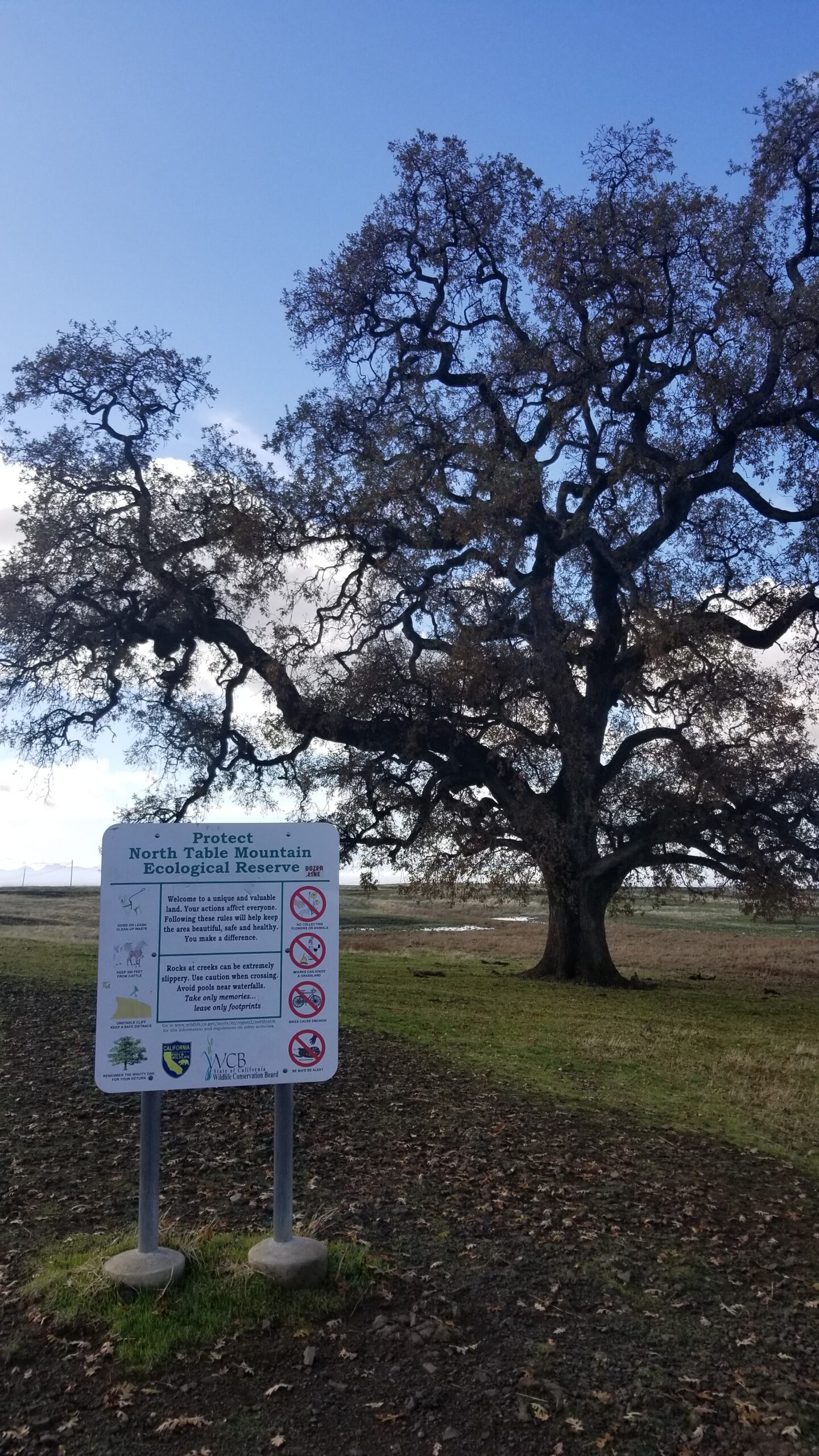
North Table Mountain is a 3,000-acre ecological reserve managed by the Bureau of Land Management, sitting just north of Oroville in the Sierra Nevada foothills. The whole plateau is essentially an ancient lava flow — you can see it everywhere once you know what you’re looking at: the dark columnar basalt cliffs, the hexagonal rock formations along the canyon walls, the mesa-flat top that stretches out to the horizon. It’s a genuinely strange and beautiful landscape, and in winter it’s especially dramatic.
The hike itself is pretty approachable — a network of trails winds around the mesa rim and dips into the canyon, with the main attraction being a series of seasonal waterfalls. After a good rain, Table Mountain Creek drops off the basalt cliffs in multiple spots, and the canyon fills with the sound of moving water. We parked near the main trailhead off Cherokee Road and headed out into the savanna.
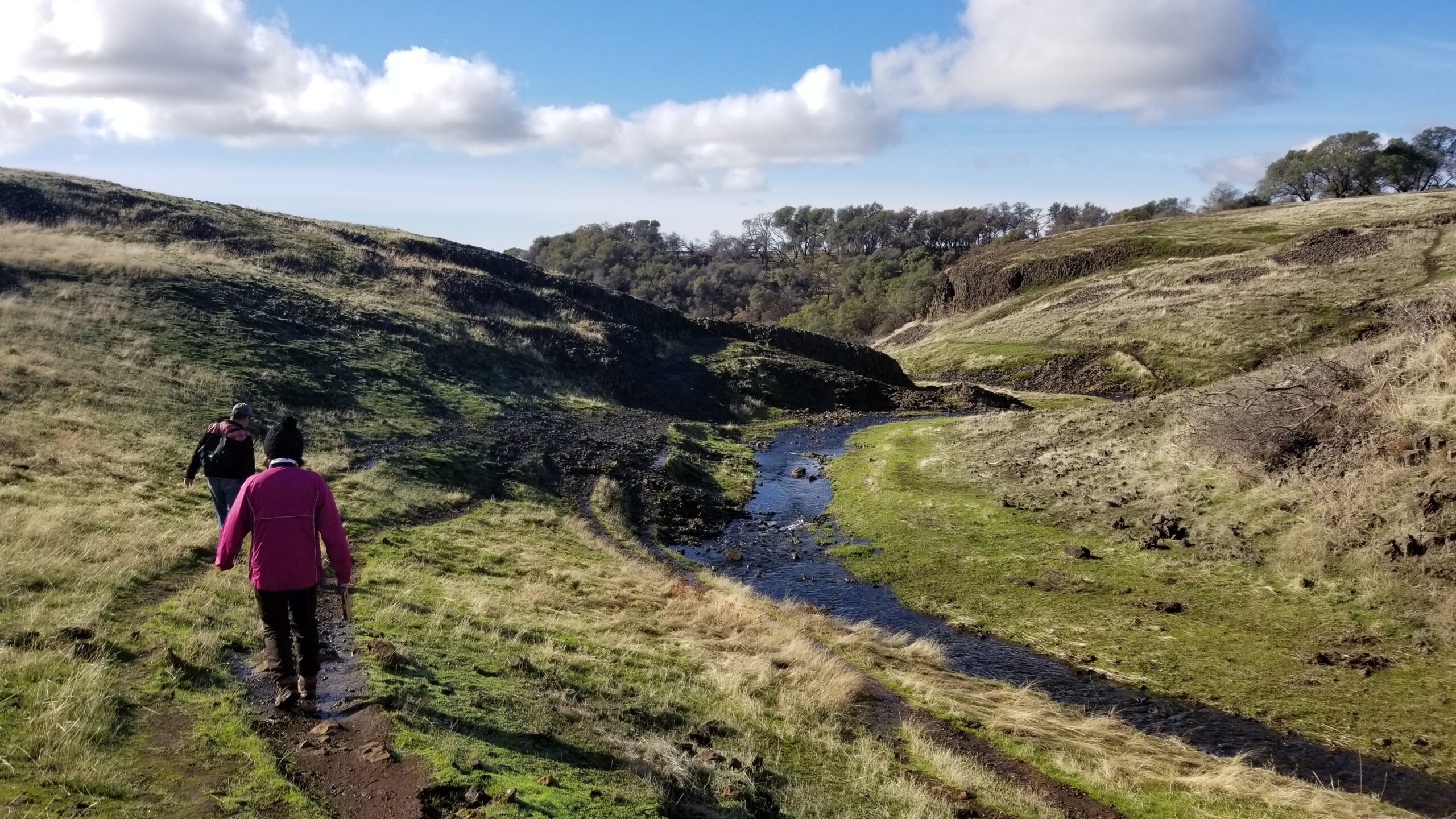
The first part of the hike follows the creek through a wide, open canyon — golden grass on either side, basalt boulders scattered along the banks, and the occasional heron lifting off as we got too close. It’s muddy in spots (okay, very muddy in spots — my boots made some questionable choices), but the trail is easy to follow. The scenery is deceptively simple: California hills doing their winter thing, all green and rolling under a clear December sky.
But then you start climbing toward the mesa rim and things get more interesting. The basalt columns become more dramatic, the canyon drops away on your left, and suddenly you’re walking along a narrow trail with a very convincing argument for staying close to the inside edge.
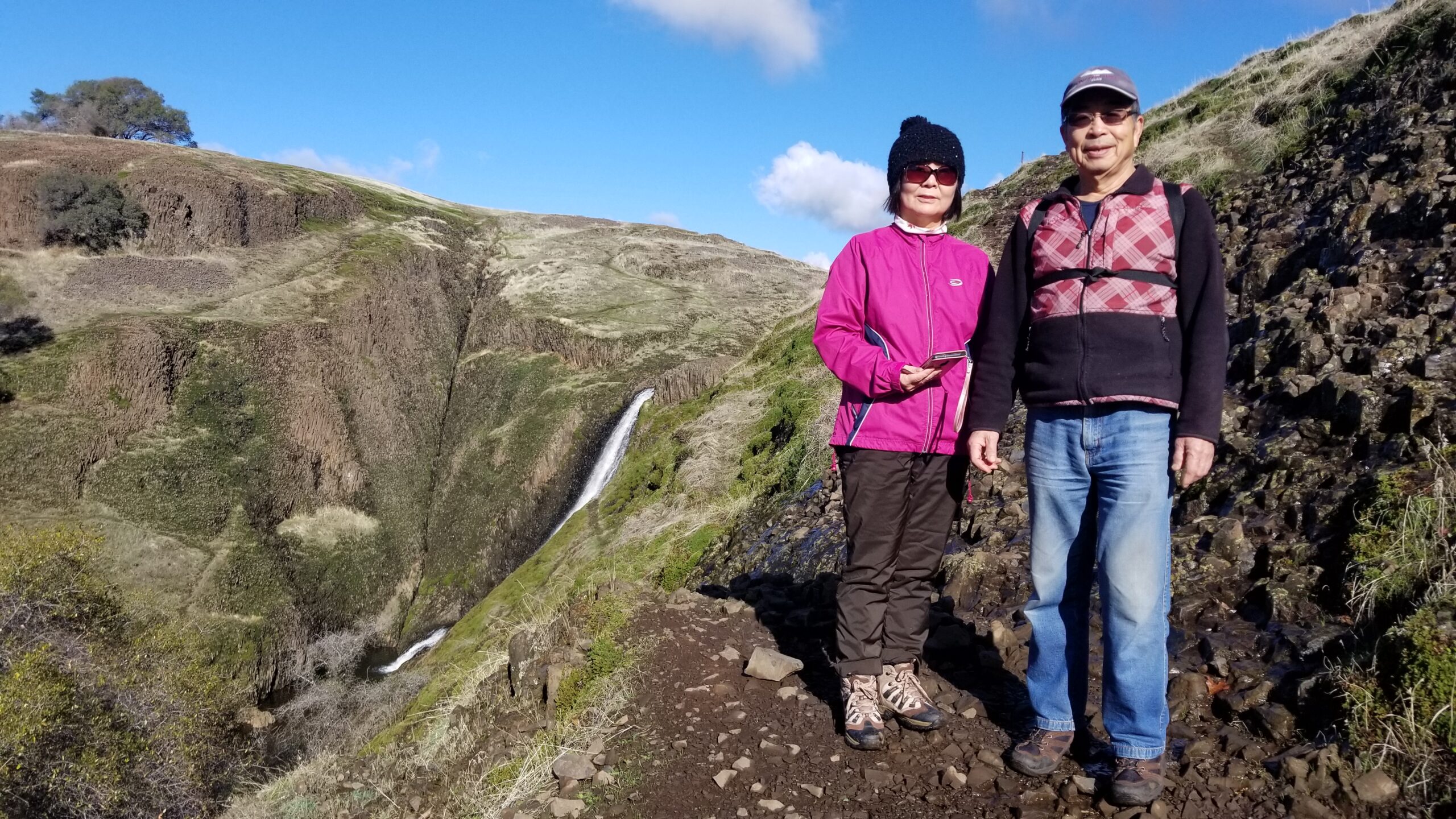
The waterfalls are the real payoff of this hike. After enough rainfall — which December usually delivers — multiple falls drop off the mesa cliffs, the most dramatic being a long, thin cascade that shoots off the basalt rim into a deep pool below. We made our way out to the edge to look down.
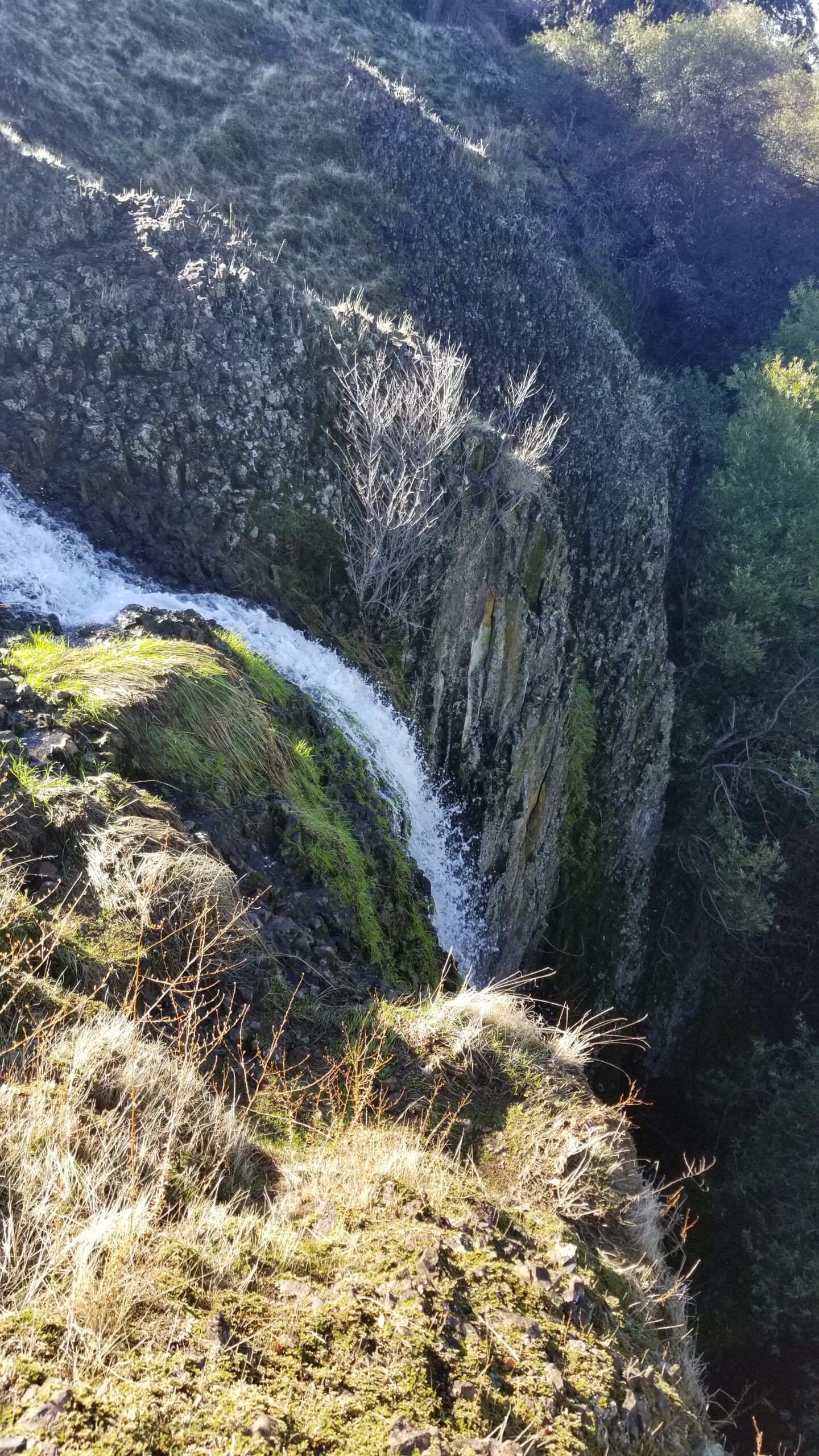
Looking straight down from the top of a waterfall is one of those things that always feels slightly more unnerving than it looks in photos. The water slides off the basalt shelf and disappears into shadow below.
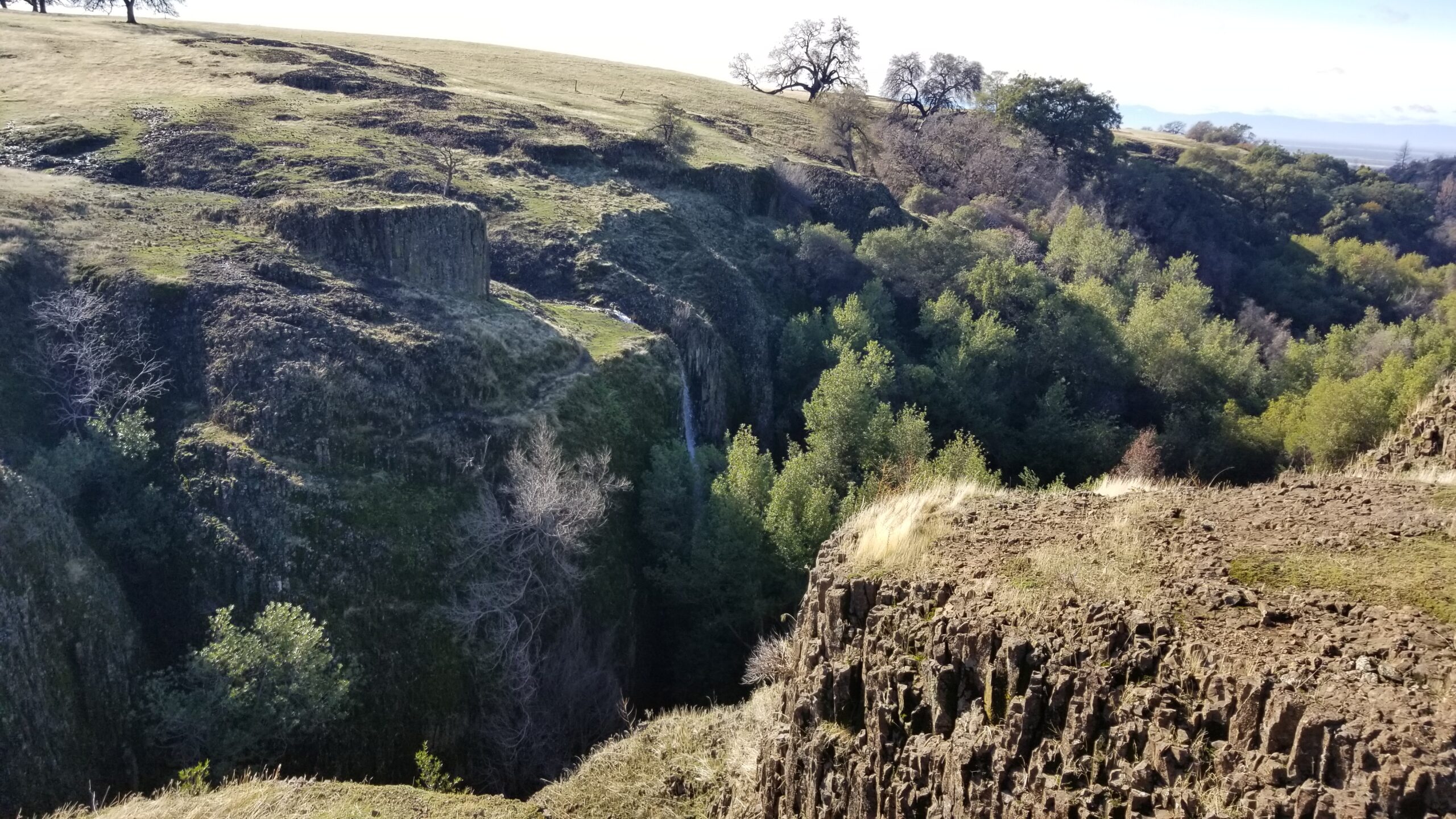
From further back along the rim trail, you get the full picture — the falls, the canyon walls, the basalt columns, and the green hillside above. This is the view you hike out for. We stood there for a while just taking it in.
North Table Mountain is one of those places that rewards going in the right season. Summer, it’s dry and dusty and the waterfalls are ghosts of themselves. But come back in December after a decent rain and you get all of this for free — no crowds, no permits, just the mud on your boots and a canyon that actually has something to say. Worth the drive up from Sacramento.
Leave a Reply